معرفی
Pablo Navarro Gil is a Principal Investigator and Structure Manager in the Early Mammalian Embryo and Stem Cells research group at the Institut Pasteur in Paris, France. He leads several major research projects funded by the European Research Council (ERC) and LabEx Revive, focusing on the mechanisms of cell identity preservation during development, particularly through transcription factors, epigenetic regulation, and mitotic bookmarking.
- University: Institut Pasteur
- Department: Early mammalian embryo and stem cells
- Position: Researcher and Principal Investigator
- Email: pnavarro@pasteur.fr
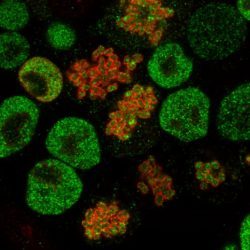
His research centers on stem cell biology and developmental genetics, with a strong emphasis on how gene regulatory networks maintain pluripotency and drive cell differentiation in early mammalian embryos. Key areas include the role of pioneer transcription factors like Nr5a2 and GATA6, the function of nuclear receptors in mitotic bookmarking, and the epigenetic control of gene expression heterogeneity.
His recent publications reveal a consistent trend in understanding the molecular choreography of early development, particularly in mouse models. His work integrates chromatin dynamics, transcription factor interactions, and signaling pathways (like PI3K/AKT) to explain lineage specification in the inner cell mass and the inheritance of cellular identity through cell division.
- ERC-2017-COG_BinD – Mitotic Bookmarking, Stem Cells and early Development (PI)
Dr. Navarro Gil mentors several PhD students and postdoctoral fellows, contributing to the training of the next generation of scientists. His laboratory investigates the contribution of long non-coding RNAs and the epigenetic foundation of gene expression heterogeneity, supported by substantial grants from European and French funding bodies. He is an active member of the Stem Cell Initiative and the LabEx Revive consortium, promoting collaborative research in regenerative biology.
His team utilizes advanced molecular and cellular techniques to study mouse embryogenesis, with a focus on the pluripotency network and its inheritance during cell division. The research has significant implications for regenerative medicine and understanding developmental disorders.