معرفی
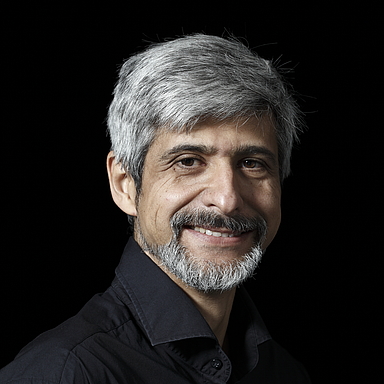
Pablo Mier is an Associate Professor at Pablo de Olavide University (Seville, Spain), accredited by ANECA as Profesor Contratado Doctor. His research focuses on low-complexity protein regions and evolution, with significant contributions to bioinformatics tool development for protein sequence analysis.
- PhD in Bioinformatics in Biotechnology and Biomedicine (2013-2014)
- M.Sc. in Health Biotechnology, Universidad Pablo de Olavide (2011-2013)
- B.Sc. in Biotechnology, Universidad Pablo de Olavide (2006-2011)
- Entry-Level Python Programmer certification (2020)
Mier's research centers on low-complexity regions in proteins, particularly tandem repeats and homorepeats, investigating their structural, functional, and evolutionary implications. His work spans computational biology, structural proteomics, and molecular evolution, with emphasis on polyQ/polyA regions in neurodegenerative contexts and bacterial/viral protein evolution. He has developed over 15 bioinformatics tools including PolyX2, pSTR, and CABRA for repeat analysis.
Recent publications (2022-2024) demonstrate consistent focus on protein low-complexity regions through computational and structural approaches. Key trends include evolutionary conservation analysis of homorepeats, structural consequences of amino acid context in polyQ regions, phase separation mechanisms in disordered regions, and cross-species repeat evolution in viruses and bacteria. His work bridges genomics, proteomics, and disease mechanisms.
Mier actively mentors through postgraduate bioinformatics courses at UPO, teaching Linux/HPC, molecular sequence handling, and functional annotation since 2015. He has organized major computational biology events including the Challenges in Computational Biology Meeting (2020) and REFRACT Symposium (2019).
He leads a dedicated research group at Pablo de Olavide University developing web-based tools for protein sequence analysis. His team maintains repositories like sQanner and orthoFind, and has organized international symposia on tandem repeat proteins. Current work focuses on completing Earth's proteome annotation and refining low-complexity region detection algorithms.