معرفی
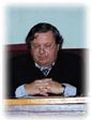
Ovidiu Babeș is a postdoctoral researcher at the Centre Leo Apostel, Vrije Universiteit Brussel, affiliated with the Faculty of History, Archaeology, Arts, Philosophy and Ethics. His research bridges history of science and philosophy of physics with a focus on early modern scientific thought.
His research interests span multiple interconnected domains of historical and philosophical inquiry. Babeș specializes in Copernicanism and heliocentrism within their historical contexts, examining how these revolutionary ideas transformed scientific communities. His work on natural philosophy explores the interplay between metaphysical speculation and empirical observation in the 17th century, particularly investigating figures like Descartes and Roberval. The fingerprint of his research reveals significant engagement with concepts of scientific authority, libertinage in intellectual circles, and the evolution of cosmological models from ancient to early modern periods.
Babeș's scholarly contributions demonstrate a distinctive approach that combines traditional historical analysis with digital humanities methodologies. His recent publications reflect a consistent focus on visual and conceptual frameworks in early modern science, particularly examining how mathematical models were constructed and represented. The research shows a trajectory moving from specific historical case studies toward more comprehensive digital reconstructions of scientific worldviews.
- Du Châtelet Prize in Philosophy of Physics (2022) - recognizing outstanding contributions to philosophy of physics with 100% relevance to philosophy of science, 98% to philosophy of physics, and 75% to history of science
As a postdoctoral researcher, Babeș actively participates in academic knowledge dissemination through conference presentations and workshop seminars. His recent activities include five presentations in 2023 covering topics from Descartes' mathematical modeling of water flow to Robert Greene's natural philosophy. His research sits at the intersection of historical scholarship and philosophical analysis, contributing to contemporary understanding of how early modern scientists conceptualized the physical world.