معرفی
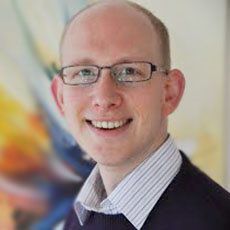
Oscar Pavlov is a Senior Lecturer (Assistant Professor) at the Tasmanian School of Business and Economics, University of Tasmania, where he teaches courses in monetary and fiscal policy, growth and development, economics for managers, and macroeconomics at the honours level.
His academic background includes a PhD in Economics from the University of Adelaide (2013), followed by a postdoctoral research fellowship at Queensland University of Technology (2013-2016) before joining the University of Tasmania.
Oscar's research focuses on macroeconomic theory and modeling, with particular emphasis on business cycles, expectations formation, and firm dynamics. His work explores how microeconomic foundations of firms' behavior translate into macroeconomic phenomena, examining topics such as product scope, multi-product firms, and the role of expectations in driving business cycle fluctuations. His research employs dynamic stochastic general equilibrium (DSGE) modeling and applied macroeconometrics to investigate these complex economic relationships.
His recent publications demonstrate a consistent focus on understanding the microfoundations of business cycle dynamics, with particular attention to how firm-level decisions regarding product scope, market entry, and pricing strategies generate aggregate economic fluctuations. His work spans from theoretical modeling in the early 2010s to more recent explorations of firm heterogeneity and business cycle mechanisms.
Oscar currently supervises two doctoral students working on "Understanding the Natural Gas Market" and "Macroeconomic impact of uncertainty in small open economies," and has successfully completed supervision of Faisal Khan's PhD on "Essays on the Transmission of International Shocks in East Asian Economies." He is actively seeking new PhD and Honours students interested in macroeconomic modeling, particularly DSGE approaches and applied macroeconometrics.
His research connects closely with real-world economic policy concerns, particularly in understanding the transmission mechanisms of economic shocks and the dynamics of business cycles in open economies.