معرفی
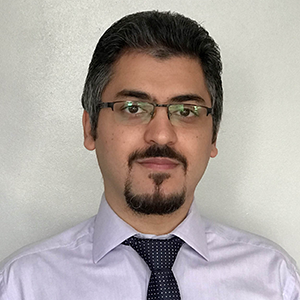
Omar Qutachi is an Associate Professor in Drug Delivery and Tissue Engineering at the Leicester School of Pharmacy, Faculty of Health and Life Sciences, De Montfort University. His work bridges pharmaceutical sciences and regenerative medicine, with a strong focus on translational research and industrial collaboration.
His educational background includes a BSc in Pharmacy (1999), MSc in Clinical Pharmacy (2005) from the University of Mosul, Iraq, and a PhD in Pharmacy (2012) from the University of Nottingham, UK. He has held academic and research positions at the University of Mosul and the University of Nottingham before joining DMU.
Dr. Qutachi's research centers on targeted drug delivery, tissue engineering (bone, muscle, eye, liver, and neural tissues), and advanced formulation technologies including nanoparticles, 3D printing, and microfluidics. His expertise in biomaterials and medical devices supports innovation in regenerative therapies.
His recent publications highlight advancements in PLGA-based microparticle systems, injectable scaffolds, and stem cell delivery for tissue regeneration. These works demonstrate a strong trend toward clinically translatable solutions in controlled release and acellular regenerative medicine.
Scientific recognition includes:
- Joint University of Nottingham/University of Birmingham Leadership Programme certificate (2015)
- Biotech Yes for Young Entrepreneur certificate (2008)
- Four Letters of Thanks from University of Mosul (2001–2008)
- Honouree certificates from Iraqi Syndicate of Pharmacists and Medical Association (2007)
- Certificate in Teaching and Learning Skills (2005)
Dr. Qutachi actively supervises postgraduate research students and has secured externally funded grants, including from the Royal Society for liver regeneration research. He has conducted consultancy for pharmaceutical companies such as Flexion Therapeutics, Neusentis/Pfizer, Calabrodental, and Locate Therapeutics, reflecting strong industry engagement.
He is affiliated with key research groups including the Pharmaceutical Technologies research group and has participated in major collaborative initiatives like the EPSRC Research Centre and the UKRMP Acellular Hub.