معرفی
Njal Rollinson is an Associate Professor in the Department of Ecology & Evolutionary Biology and the School of the Environment at the University of Toronto, where he also serves as Graduate Associate Director. His research program focuses on evolutionary ecology of ectothermic vertebrates, particularly reptiles, amphibians, and cold-water fish near their northern range limits.
Dr. Rollinson earned his PhD from Dalhousie University, MSc from the University of Guelph, and BAT from Nippissing University. His research combines long-term monitoring, field and lab experiments, and metadata to explore life histories, maternal effects, growth patterns, sex determination, and thermal traits in ectotherms.
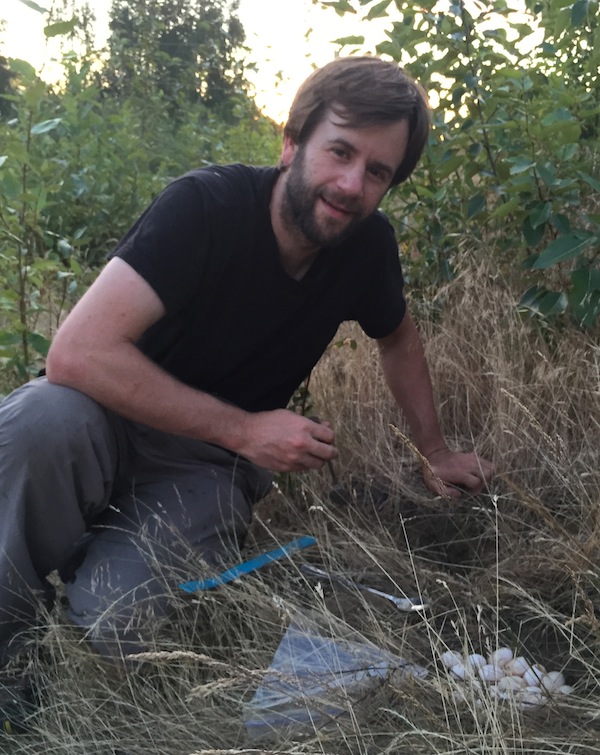
His work is primarily conducted in the Algonquin Dome region of Ontario, Canada, where he maintains long-term studies of reptiles and amphibians, including the Algonquin Park turtle study founded by Dr. Ron Brooks in 1972. His lab investigates how ectotherms adapt to seasonal environments and respond to climate change as the region experiences rapid warming.
Analysis of Dr. Rollinson's recent publications reveals a strong focus on temperature-dependent sex determination in reptiles, thermal ecology, and long-term monitoring of ectotherm populations. His work often integrates field studies with theoretical models to understand life history evolution and conservation implications, with particular attention to how climate change affects species near their northern range limits.
Dr. Rollinson actively mentors graduate students through the Department of Ecology and Evolution, maintaining a tightly-knit research group that encourages student creativity while providing strong methodological guidance. He emphasizes statistical skills development and deep engagement with both classic and current literature in evolutionary ecology.
His lab maintains the long-term turtle life-history study in Algonquin Park, which has generated tens of thousands of individual nesting records and clutch measurements. This dataset provides unique opportunities to study adaptation to northern environments, life-history trade-offs, phenotypic responses to climate change, and physiological ecology across multiple decades.