معرفی
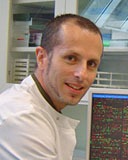
Nikolas Herold is an Assistant Professor (Docent) at Karolinska Institutet, Department of Women's and Children's Health, specifically within the Pediatric Oncology and Pediatric Surgery division. He works as a Paediatric Oncologist at Astrid Lindgren's Children Hospital, Karolinska University Hospital. His research focuses on translational studies in childhood cancer and histiocytic diseases, with particular emphasis on understanding chemoresistance mechanisms and improving treatment efficacy.
Dr. Herold's research interests span pediatric oncology, childhood cancer, chemoresistance, nucleotide metabolism, histiocytic diseases, and Langerhans Cell Histiocytosis. His groundbreaking work has identified SAMHD1 as a major resistance factor to cytarabine and other nucleoside analogues used in cancer treatment. He discovered that hydroxyurea can indirectly inhibit SAMHD1, leading to the development of clinical trials to improve treatment outcomes for patients with acute myeloid leukemia and other cancers.
His publication record demonstrates a strong focus on understanding drug resistance mechanisms, particularly related to SAMHD1 protein function in various cancers including acute myeloid leukemia, lymphomas, and neuroblastoma. His work bridges basic science with clinical applications, aiming to translate laboratory findings into improved patient outcomes.
- Research Prize Jeanssons Foundations
- Translational prize of the Swedish Medical Association
- NOPHO-prize 2016, Stockholm, Sweden
Dr. Herold supervises several PhD students including Nikolaos Tsesmetzis (main supervisor), and Hajar Ali Mohammed Ba Omar, Fredrik Sundquist, and Maria Alpman Sjöborg (co-supervisor). He has received significant research funding from the Swedish Research Council, Swedish Cancer Society, and Barncancerfonden for his work on targeting drug resistance in leukemias and colorectal cancer. His research group is actively working on multiple projects related to SAMHD1 as a resistance factor, tumor suppressor, and regulator of immune responses, with the goal of improving cancer treatments through targeted interventions.