معرفی
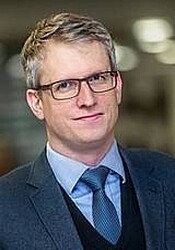
Niklas K. Steffens is an Associate Professor and Director of the Centre for Business and Organisational Psychology (CBOP) at the School of Psychology, The University of Queensland. He joined UQ in 2012 after completing his PhD at the University of Exeter (UK) and has previously lived, worked, and studied in Germany, the UK, and Spain. His academic profile is distinguished by his leadership in social identity research and organizational psychology.
Steffens conducts fundamental and applied research focused on psychological drivers that make groups and organizations fairer, more motivating, more effective, and healthier. His expertise spans social identity and teamwork processes in social and organizational contexts, including leadership and followership, motivation and creativity, and health and well-being. He employs diverse research methodologies including experimental and intervention studies, field and survey research, archival methods, psychometric scale development, and systematic reviews and meta-analysis.
Analysis of his recent publications (2024-2025) reveals a strong focus on identity leadership, with significant contributions to measuring leadership constructs (including developing the Visual Identity Leadership Scale), exploring leadership in sports contexts, examining organizational identification, and investigating the social identity approach to health and well-being. His work frequently appears in top-tier journals across psychology, leadership, and organizational behavior fields.
- ARC DECRA fellowship (2018)
- APS Workplace Excellence Award for Leadership Development (2017) for the 5R leadership development program
Steffens is actively involved in leadership development through the 5R program and serves as an IECL-certified organizational coach. He is a co-founding member of the Global Identity Leadership Development (GILD) network and serves on the editorial boards of the European Journal of Social Psychology and The Leadership Quarterly. As editor of 'Organisational Psychology: Revisiting the Classic studies' (2023), he has contributed significantly to advancing the field's theoretical foundations.