معرفی
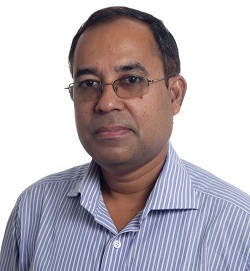
Ni-Bin Chang is a Professor in the Department of Civil, Environmental, and Construction Engineering at the University of Central Florida, College of Engineering and Computer Science. He has been a leading figure in sustainable systems engineering since 2002, with extensive contributions to environmental engineering, remote sensing, and the urban food-energy-water nexus. At UCF, he directs the Stormwater Management Academy and leads interdisciplinary research with significant societal and industrial impact.
His research interests lie at the intersection of sustainability science and engineering, focusing on:
- Urban food-energy-water-waste nexus
- Water quality and nutrient removal
- Green sorption media and sustainable materials
- Remote sensing and spatial informatics
- Machine learning in environmental systems
- Resilient urban infrastructure
The recent publications highlight a strong trend toward integrating artificial intelligence, remote sensing, and systems modeling to tackle urban sustainability challenges. His work increasingly combines machine learning with agent-based modeling and tensor decomposition to optimize environmental solutions, particularly in stormwater and air quality management. There is a clear emphasis on circular economy principles, resilience, and transdisciplinary innovation.
His scientific honors include:
- Blaise Pascal Medal from the European Academy of Sciences
- Fulbright Canada Research Chair Award
- Outstanding Achievement Award from ASCE
- Induction as Fellow of the National Academy of Inventors
- Fellowships in ASCE, IEEE, SPIE, AAAS, RSC, and others
Chang has secured over $18.66 million in research funding and has been instrumental in translating research into practice—his 15 patented green sorption media technologies have been licensed to industry, attracting $20 million in investment. He serves as Editor-in-Chief of the Journal of Applied Remote Sensing and the Journal of Hydroinformatics, shaping scholarly discourse in his fields. He mentors students and leads a dynamic research team at the Stormwater Management Academy, where over 70 field applications have been developed for nutrient removal and recovery.
He also leads a research laboratory focused on sustainable infrastructure, with test beds for green filtration systems, urban metabolism modeling, and AI-driven decision support tools. His team integrates field experiments with computational modeling to develop scalable, cost-effective, and environmentally benign solutions for cities worldwide.
حوزههای پژوهشی