معرفی
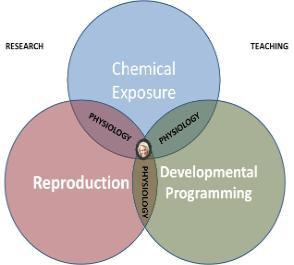
Professor Neil P Evans serves as Professor of Integrative Physiology and Director of Education (Physiology, Ageing & Welfare) at the School of Biodiversity One Health and Vet Medicine, University of Glasgow. His research program investigates the regulation of neuroendocrine axes, with particular emphasis on reproductive function and how it is modulated by both internal factors (gonadal steroids, stress hormones) and external environmental factors, especially chemical mixtures found in biosolids.
Dr. Evans' research spans multiple interconnected domains within neuroendocrinology and reproductive physiology. He investigates how developmental exposure to environmental chemicals can program later dysfunction in neuroendocrine systems, with particular attention to sexually dimorphic effects. His work also explores the "wider effects" of hormonal signaling systems on non-reproductive tissues such as smooth muscle in the bladder, cardiac muscle, and the adrenal gland. Much of his research utilizes sheep as an animal model to study developmental programming effects of environmental chemical mixtures on reproductive and metabolic functions across the lifespan.
Analysis of Professor Evans' recent publications (2023-2025) reveals a strong focus on developmental programming and endocrine disruption. His research team frequently examines how environmental chemical exposures during critical developmental windows affect reproductive physiology, metabolic function, and stress responses in a sex-specific manner. A notable trend is the examination of "real-life" environmental chemical mixtures rather than single compounds, providing more ecologically relevant insights into endocrine disruption.
Professor Evans maintains active collaborations with Dr. Michelle Bellingham and other colleagues at the University of Glasgow and beyond. His research has significant implications for understanding how environmental factors contribute to the developmental origins of health and disease, with relevance to both human and animal health. As Director of Education for Physiology, Ageing & Welfare, he also plays a key role in shaping academic programs within his department.