معرفی
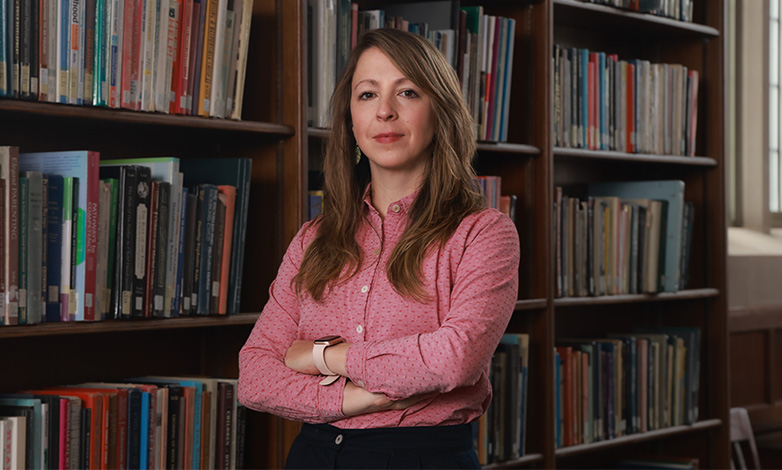
Natalia Slutskaya is a Professor in Work and Organisation Studies at the University of Sussex Business School. She earned her PhD at the University of Exeter and has established herself as a leading scholar in the sociology of work, particularly focusing on dirty work, stigma, and recognition. She has held visiting positions at the University of Stockholm and Bayes Business School, demonstrating her international scholarly engagement.
Professor Slutskaya's research interests span multiple interconnected areas including:
- Dirty Work and Stigma at Work
- Recognition and Status in Organizations
- Equality, Diversity and Inclusion
- Future of Work and New Forms of Exclusion
- Temporality and Precarious Work
- Redistribution and Social Justice
Her scholarly work reveals a consistent focus on how workers in stigmatized occupations navigate issues of recognition and status. Her recent publications show an evolving trajectory from examining specific dirty work contexts (like refuse collectors and butchers) toward broader theoretical frameworks addressing temporality, precarity, and the future of work. She employs innovative qualitative methods, particularly collaborative ethnographic documentary approaches, to give voice to marginalized workers.
Professor Slutskaya has received significant recognition for her contributions to the field:
- SAGE Prize for Innovation/Excellence for her paper 'Beyond the symbolic: a relational approach to dirty work through a study of refuse collectors and street cleaners'
- Emerald Literati Outstanding Paper Award for 'Lessons from photoelicitation: encouraging working men to speak'
- Features in BBC Radio 4's 'Thinking Allowed' for two projects on dirty work
As an academic leader, Professor Slutskaya has served as an associate editor for Gender, Work and Organization and European Management Review. Her teaching focuses on Ethics and Organisations, particularly courses on responsibility and justice. Her work bridges theoretical sophistication with methodological innovation, making significant contributions to understanding how workers navigate stigma and seek recognition in contemporary organizational contexts.