معرفی
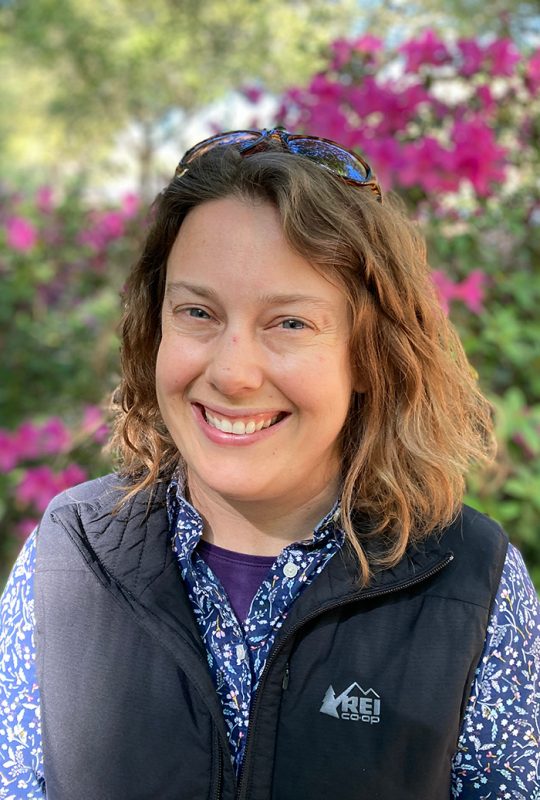
Nancy E. McIntyre is a Professor in the Department of Biological Sciences at Texas Tech University and serves as Curator of Birds at the Natural Science Research Laboratory. Her research integrates landscape ecology, GIS, and remote sensing to study the impacts of land-cover change on ecological connectivity, with a focus on insects, birds, and wetland systems.
Education:
- Postdoctoral Research Associate, Urban Ecology, Arizona State University (1998–2000)
- Ph.D., Ecology, Colorado State University (1998)
- M.S., Zoology, University of Georgia (1993)
- B.S. Magna cum laude, Zoology, University of Georgia (1991)
Her research focuses on pattern-process relationships in human-altered landscapes, particularly examining how habitat fragmentation affects biodiversity, species distributions, and ecosystem function. She studies a wide range of taxa, with special emphasis on Odonata and birds. Her lab combines field studies, spatial modeling, and geospatial technologies to address both fundamental and applied ecological questions.
The recent publications reflect a strong trend in using remote sensing, GIS, and modeling to assess landscape connectivity, land-cover change, and species responses across diverse systems—from dragonflies in isolated wetlands to desert tortoises and prairie-chickens in fragmented habitats. There is a consistent focus on conservation applications and predictive modeling under climate and land-use change scenarios.
Scientific Awards and Recognitions:
- Multiple Sigma Xi, NASA-MSU, and HHMI awards
- Graduate fellowships including Colorado State University Dissertation Fellowship
- University-level awards for mentoring and research excellence
- Student awards in landscape ecology, entomology, and conservation
Dr. McIntyre has successfully advised numerous M.S. and Ph.D. students, many of whom have received external funding and published in high-impact journals. Her lab is supported by grants from NSF, Department of Interior, USDA, and other agencies, reflecting sustained research productivity. She also leads interdisciplinary projects that bridge ecology, education, and museum science.