معرفی
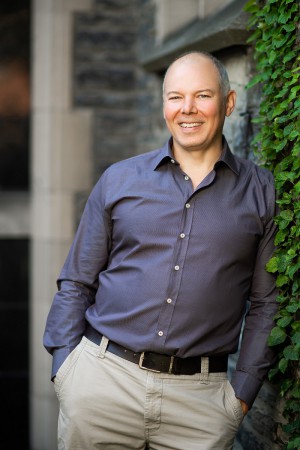
Néstor Medina serves as Associate Professor of Religious Ethics and Culture at Tyndale University's Emmanuel College, holding cross-appointments with the University of Toronto through St. Michael's College. An ordained minister of the Pentecostal Assemblies of Canada, he bridges academic scholarship with practical theological engagement across cultural contexts.
His academic preparation includes:
- Bachelor of Religious Education (BRE) from Tyndale University College
- Master of Theological Studies (MTS) from Tyndale University College / Wycliffe College
- MA from St Michael’s College, University of Toronto
- PhD (Interdisciplinary Studies) from St Michael’s College, University of Toronto
Medina's research critically investigates intersections of culture, history, ethnoracial relations, and religious knowledge systems through contextual, liberationist, and decolonial frameworks. He specializes in Pentecostalism across the Americas and colonial Latin American ethnoracial dynamics, examining how religion shapes and is shaped by historical power structures, particularly regarding indigenous and mestizo identities. His work consistently centers marginalized perspectives while challenging Eurocentric theological paradigms.
Recent publications demonstrate a cohesive trajectory in decolonial theology, ethnoracial justice, and transnational religious identity formation. Medina's scholarship connects historical analysis of colonialism with contemporary social issues, revealing patterns in indigenous reconciliation processes, Latina/o/x pneumatology, and the religious dimensions of migration. His interdisciplinary approach spans theology, ethics, cultural studies, and postcolonial theory with remarkable consistency.
Key recognitions include:
- Hispanic Theological Initiative book award (2012) for Mestizaje: (Re)Mapping 'Race,' Culture, and Faith in Latina/o Catholicism
- First Book Grant for Minority Scholars (2014)
- Project Grant for Researchers (2018)
Medina has secured significant research funding through competitive grants and serves as Senior Editor of Perspectivas journal. His teaching extends globally through 12 consecutive years with the United Church's People in Partnership program at Cuba's Seminario Evangélico de Teología. He actively contributes to scholarly discourse through memberships in the Society of Christian Ethics, American Academy of Religion, La Comunidad of Hispanic Scholars of Religion, and six other specialized theological associations.
While not directing a formal laboratory, Medina collaborates through international academic networks and field partnerships. His current research on colonial Latin American ethnoracial relations informs ongoing work connecting Canada and Guatemala's truth and reconciliation processes, with future projects likely expanding into transnational religious movements and indigenous knowledge systems.