معرفی
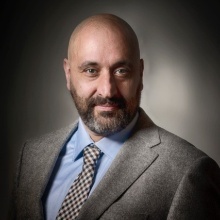
Muhammad Jawad is an Assistant Professor at COMSATS University Islamabad in the Department of Electrical and Computer Engineering. He previously completed his PhD at North Dakota State University in 2015 and has also been affiliated with the University of Manchester's Department of Electrical and Electronics Engineering. His academic career spans over a decade with continuous research contributions from 2013 to the present.
Dr. Jawad's research focuses on the intersection of electrical engineering and computer science, particularly in smart grid technologies, energy management systems, machine learning applications for power systems, and IoT security. His work demonstrates strong interdisciplinary collaboration, with numerous publications in high-impact journals including IEEE Access, Future Internet, and Expert Systems with Applications. His research addresses critical challenges in modern power systems, renewable energy integration, and computational methods for electrical engineering applications.
Analysis of his recent publications reveals a clear research trajectory focusing on applying advanced computational techniques to solve practical problems in power systems and energy management. His work spans machine learning for intrusion detection in IoT devices, optimization techniques for battery sizing and energy management, thermal-aware scheduling algorithms, and blockchain applications for distributed systems. The interdisciplinary nature of his research connects electrical engineering fundamentals with cutting-edge computer science methodologies.
Dr. Jawad has established a strong collaborative network, frequently working with researchers from COMSATS University Islamabad, North Dakota State University, and international institutions. His collaborations span across multiple research areas, indicating his ability to bridge different technical domains. While specific grant information isn't detailed in the publication records, his consistent output suggests successful funding support for his research activities.
Though specific laboratory affiliations aren't explicitly mentioned in the publication metadata, his research areas suggest involvement with power systems laboratories, smart grid research facilities, and possibly computer architecture labs focused on energy-efficient computing. His work on memristor modeling and thermal-aware scheduling indicates potential connections to hardware and VLSI research facilities as well.