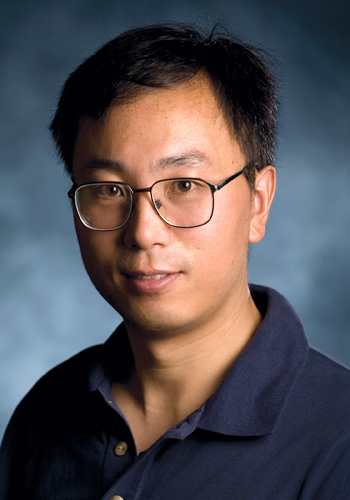
معرفی
Muhammad Amjad, Ph.D., is a researcher at the Chair of Thermodynamics at the Technical University of Munich (TUM), working under Prof. Wen. His affiliation is with the Boltzmannstraße 15 campus in Garching near Munich, where he maintains office space in room 5507.EG.726 and can be contacted at m.amjad@tum.de. His research spans multiple cutting-edge areas at the intersection of thermal engineering, nanotechnology, and sustainable energy systems.
Dr. Amjad's research interests focus on advanced manufacturing and energy applications, particularly 3D printing of micro and nano superhydrophobic structures, solar water splitting, microfluidic manufacturing, nanomaterials, and direct solar absorption technologies. His work on nano refrigerator based solar refrigeration demonstrates his innovative approach to sustainable cooling solutions. He actively seeks research collaborations in 3D printing of micro/nanostructures, microfluidic devices, sensor casings, and microreactors for medical diagnostics, water splitting, droplet manipulation, photocatalysis, and heat transfer intensification.
Analysis of his recent publications reveals a strong emphasis on experimental thermal engineering with particular focus on nanofluid applications across various energy systems. His work spans solar energy conversion, water desalination, building energy efficiency, and industrial process optimization, consistently linking fundamental thermal phenomena with practical sustainable solutions. The interdisciplinary nature of his research connects materials science, fluid dynamics, and renewable energy engineering.
Dr. Amjad serves as Associate Editor for Frontiers in Energy Research (Solar Energy section) since 2023 and has held significant editorial roles including Lead Guest Editor for special issues on Energy Materials Based Novel Solar Thermal Applications and Co-editor for special issues on Integrated Waste Biorefineries. These editorial positions reflect his standing in the energy research community.
His research program demonstrates strong collaborative networks across international institutions, with frequent co-authorship patterns indicating active partnerships with researchers in Pakistan, Brazil, and other international collaborators. His work often bridges fundamental thermal science with practical engineering applications, particularly in sustainability contexts.