معرفی
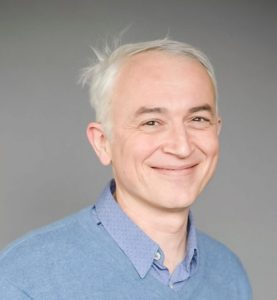
Monika Schleier-Smith is an Associate Professor in the Physics Department at Stanford University, where she conducts groundbreaking experimental research at the intersection of quantum physics, atomic physics, and quantum information science. Her work focuses on advancing optical control of laser-cooled atom interactions to enable applications in quantum simulation, metrology, and computation.
- Ph.D. in Physics from MIT (2011)
- A.B. in Chemistry & Physics, Mathematics from Harvard (2005)
- 2014–2019: Postdoctoral research at LMU Munich and Max Planck Institute of Quantum Optics
Her research explores the complex territory between few-particle quantum mechanics and macroscopic classical physics, aiming to engineer new quantum states and Hamiltonians with atomic ensembles. Key applications include entanglement-enhanced sensing, quantum gravity simulations, and quantum computing advancements. She has pioneered techniques for programmable non-local interactions in optical cavities, enabling studies on quantum scrambling and holographic duality.
Recent publications demonstrate her focus on spin squeezing, quantum state engineering, and topological phases, with applications to quantum clocks, sensors, and computational systems. Her experimental work has direct implications for practical quantum technologies and fundamental physics research.
- 2024 Moore Foundation Experimental Physics Investigator
- 2023 Benjamin Franklin NextGen Award
- 2021 American Physical Society Fellow
- 2020 MacArthur Fellow
As a doctoral advisor at Stanford, she mentors students in quantum simulation and entanglement research. Her laboratory (sslab.stanford.edu) develops novel approaches to quantum error correction and collaborates with Stanford-SLAC Quantum Science and Engineering Initiative.