معرفی
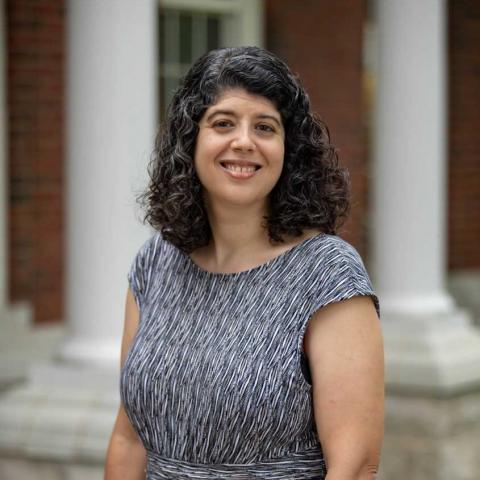
Monica Miller is a Foundation Professor with a split appointment in the Department of Sociology and the interdisciplinary Social Psychology Ph.D. program at the University of Nevada, Reno. She concurrently serves as adjunct faculty at the Grant Sawyer Center for Justice Studies and an affiliate of the Department of Gender, Race, and Identity, demonstrating deep institutional integration across multiple academic units.
Her educational credentials include dual doctoral training with a Ph.D. in Social Psychology (2004) and J.D. (2002) from the University of Nebraska, complemented by a Master's in Social Psychology (2002), Bachelor's in Psychology with minors in Sociology and English (1998), and specialized certificates in Public Policy (2004) and Gender/Sexuality Inclusion (2021).
- Ph.D. Social Psychology (2004), University of Nebraska-Lincoln Law-Psychology Program
- J.D. Juris Doctorate (2002), University of Nebraska College of Law
- M.A. Social Psychology (2002), University of Nebraska-Lincoln
- B.A. Psychology (1998), University of Nebraska-Lincoln (Minors: Sociology, English)
- Certificate in Public Policy (2004), University of Nebraska-Lincoln
- Certificate in Gender/Sexuality Inclusion (2021), University of Pittsburgh
Miller's research critically examines the nexus of psychology and law through empirical investigations of social cognitive biases in legal contexts. Her work spans juror decision-making regarding hate crimes and conspiracy theories, religious/gender prejudice in courtroom settings, moral reasoning in justice processes, family law dynamics, and therapeutic interventions like facility dogs in courtrooms. She employs rigorous experimental methodologies including mock juror studies to dissect how community sentiment, implicit biases, and scientific evidence interface with legal frameworks.
Recent publications (2022-2024) reveal intensified focus on contemporary societal challenges including pandemic impacts on legal systems, QAnon-related conspiracy theories, and technological innovations like robot therapy dogs. Her scholarship consistently bridges theoretical psychology with practical legal applications, featuring strong interdisciplinary collaboration patterns and student co-authorship across 85% of recent works. The recurring themes of bias mitigation, well-being in legal contexts, and evidence-based policy reform define her scholarly trajectory.
Scientific Awards: No awards were documented in the provided materials.
Dr. Miller actively mentors five Ph.D. students—Katie Cunius, Teyah Giannetta, Kylie Kulak, Laura Pazos, and Grace Robinette—and maintains an open invitation for graduate and undergraduate researchers to join her laboratory. While specific grant details are unreported, her consistent publication output across high-impact journals suggests sustained research funding. Her laboratory operationalizes theory through the "Super Readers are Superheroes" literacy program, which applies psychological principles to community education initiatives.
The Miller Lab integrates academic research with community engagement through its signature literacy program, while maintaining strong ties to justice studies via the Grant Sawyer Center. Her interdisciplinary approach cultivates collaborative networks spanning sociology, psychology, law, and gender studies, positioning her work at the forefront of empirically grounded legal reform.