معرفی
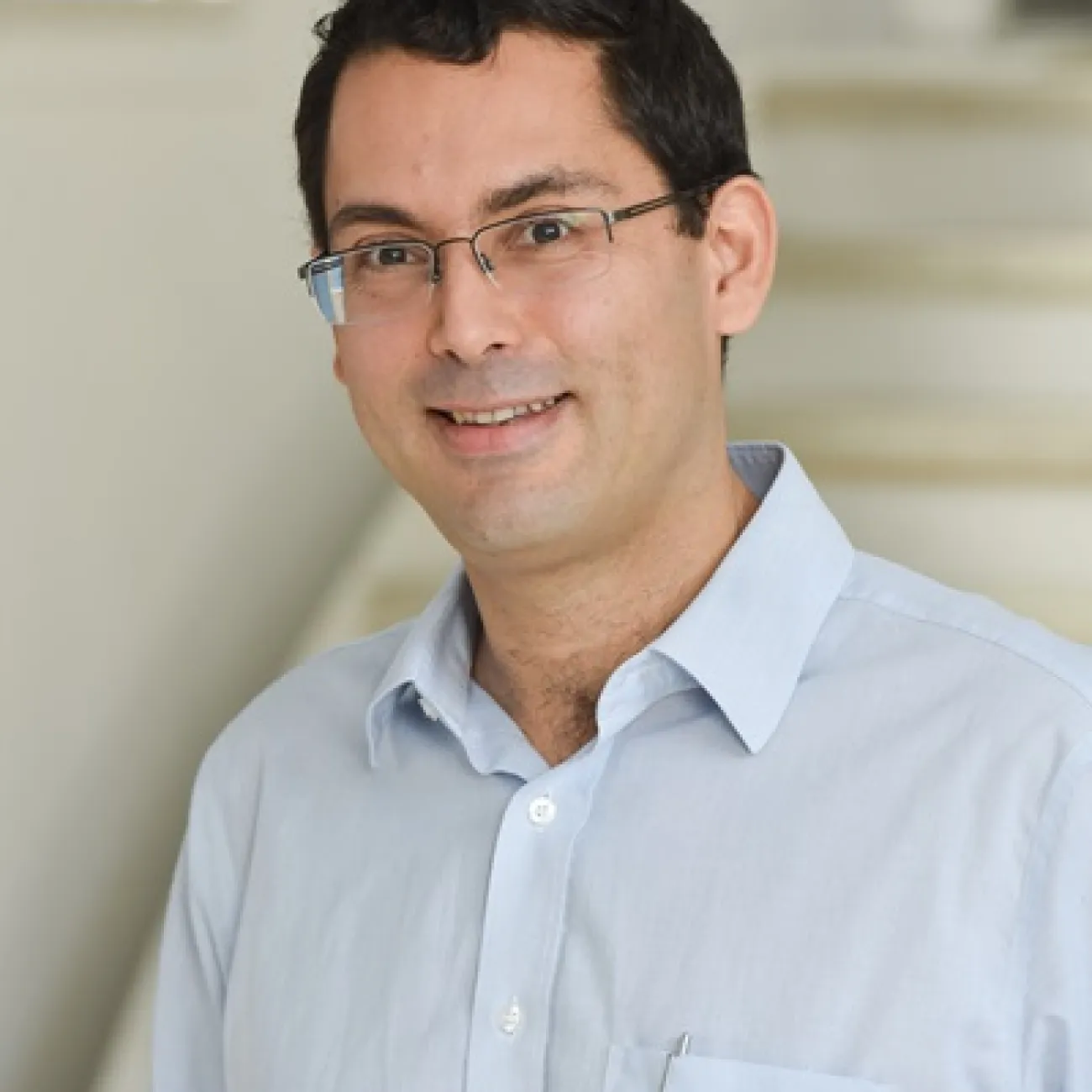
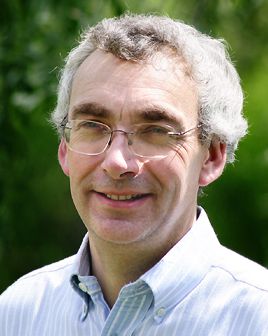
Prof Mike Payne is a Professor at the University of Cambridge's Department of Physics (Cavendish Laboratory) within the School of Physical Sciences, and a Fellow of Pembroke College. He directs the EPSRC Centre for Doctoral Training in Computational Methods for Materials Science and chairs the Cambridge High Performance Computing Service, positioning him at the forefront of computational science infrastructure.
His pioneering research spans quantum mechanical total energy calculations since 1985, with breakthroughs in density functional theory implementation. Key contributions include CASTEP (the first accessible commercial pseudopotential code), ONETEP (linear-scaling DFT), Learn on the Fly hybrid modeling, and Gaussian Approximation Potentials. His work focuses on developing predictive multiscale simulation frameworks that balance computational efficiency with quantum mechanical accuracy, significantly advancing materials design capabilities.
Payne's publication history reveals an evolution from foundational DFT algorithms toward machine learning-enhanced interatomic potentials and scalable quantum simulations. His 2010 Gaussian Approximation Potentials paper exemplifies this trajectory, merging quantum accuracy with classical computational efficiency.
Major recognitions include:
- Maxwell Medal and Prize (1996)
- Mott Lecture (1998)
- Citation Superstar of the U.K. (1999)
- Fellow of the Royal Society (2008)
- Honorary Fellow of the Institute of Physics (2011)
- Swan Medal (2014)
As EPSRC Centre Director, Payne oversees doctoral training in computational materials science while leading the Cambridge High Performance Computing Service. His commercial impact is substantial through CASTEP (>$30M cumulative sales) and ONETEP licensing. The TCM Group he leads comprises postdoctoral researchers and students developing next-generation quantum simulation tools, with CASTEP serving as the foundation for industrial materials discovery pipelines across pharmaceutical and semiconductor sectors.
Payne's laboratory within the Cavendish Laboratory's Ray Dolby Centre operates as a nexus for quantum simulation development, collaborating with engineering departments on hybrid modeling approaches. Current efforts focus on black-box multiscale frameworks integrating machine learning with first-principles physics, aiming to automate materials discovery processes for energy and semiconductor applications.