معرفی
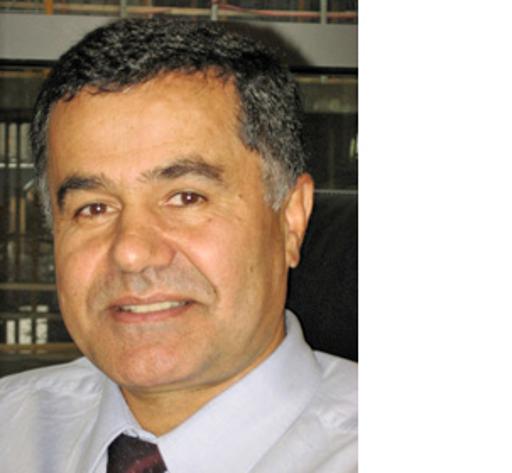
Mikael Björling serves as Associate Professor in Physical Chemistry and Senior Lecturer in Chemistry at the University of Gävle, where he actively contributes to the Environmental Technology research group. His work bridges environmental engineering applications and science education, with current international collaborations including ventilation studies for the Oslo Viking Museum remodeling (with University of Oslo) and New Zealand school ventilation projects (with University of Auckland).
Björling's research spans two interconnected domains: environmental air quality systems and science pedagogy. In environmental science, he pioneers tracer gas methodologies for measuring air exchange rates in diverse structures—from historical wooden buildings to schools—with direct applications in public health (asthma/allergy mitigation) and heritage conservation. His parallel work in science education addresses didactic challenges in natural sciences, developing innovative approaches for teaching chemistry concepts to younger learners and improving STEM pedagogy through subject-specific didactics.
Analysis of his recent publications reveals a strategic focus on sustainable ventilation solutions, where engineering precision meets policy relevance. Key trends include adapting low-cost monitoring technologies for real-world settings, establishing causal links between building ventilation and child health outcomes, and developing conservation protocols for sensitive historical structures. His work consistently emphasizes practical implementation over theoretical exploration, with growing attention to global applicability across Scandinavian, Chinese, and New Zealand contexts.
No major scientific awards were documented in available sources.
Björling currently supervises PhD candidate Dan Wahlborg's research on birch pollen allergen release mechanisms. His active grant portfolio features two significant international projects: the Viking Museum ventilation study addressing conservation challenges in historical structures, and the New Zealand school ventilation initiative examining airflow patterns in educational environments. These projects demonstrate his capacity to secure cross-border research funding while addressing tangible societal needs.
As a core member of the University of Gävle's Environmental Technology research group, Björling participates in interdisciplinary teams developing sustainable solutions for indoor air quality challenges. His collaborations with institutions like the University of Oslo and University of Auckland extend this network globally, focusing on practical applications of ventilation science in culturally diverse settings.