معرفی
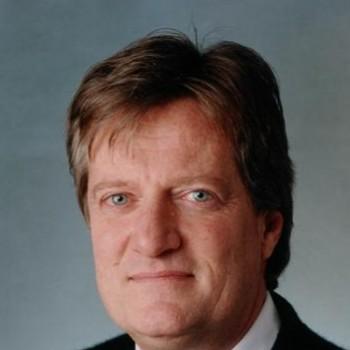
Michael Moseley is a Professor of Radiology at Stanford University's Radiological Sciences Laboratory at the Lucas Center, where he has been working since 1993. Previously, he was in Radiology at UCSF during the rapid rise of MR in the 1980s. He holds multiple affiliations at Stanford including membership in Bio-X, the Cardiovascular Institute, Maternal & Child Health Research Institute (MCHRI), Stanford Cancer Institute, and Wu Tsai Neurosciences Institute.
Dr. Moseley earned his PhD from Uppsala University Sweden in 1980 in Physical Chemistry and completed postdoctoral work at the Weizmann Institute in Israel until 1982. His research has focused on using diffusion NMR to investigate biological structures from proton relaxation and diffusion dynamics.
Dr. Moseley's primary research interests center on developing MR methods to detect the earliest events of experimental and clinical cerebral vascular diseases using functional neuroimaging (DWI, PWI, and fMRI) methods. He was one of the first investigators in vascular MR and was the first to show in 1989 that mapping white matter fiber orientation using diffusion MRI was a novel measure of neuroimaging. His work on water diffusion-sensitive MR imaging of the brain has revolutionized knowledge of stroke onset and evolution.
Dr. Moseley has published over 480 articles with an H-Index of 82 and more than 23,000 citations. His recent publications focus on AI applications in stroke imaging, pediatric neuroimaging, cerebral blood flow quantification, and advanced MRI techniques for vascular diseases.
- ISMRM Gold Medal (2000)
- ISMRM President (2003-2004)
- ISMRM Fellow (1998)
- Honorary Member SMRT (2007)
- Crues-Kressel Award (2014)
Dr. Moseley has served on editorial boards, co-authored three books and 30 book chapters. He directs a Stanford summer course for the Japanese Society of Radiological Technologists and has participated in numerous international outreach meetings. His teaching includes courses such as 'Probes and Applications for Multi-modality Molecular Imaging of Living Subjects' and various independent study options for graduate and medical students.