معرفی
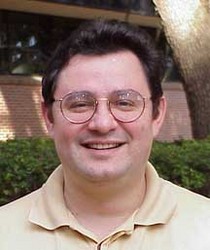
Michael J. Schnieders is a Professor in the Roy J. Carver Department of Biomedical Engineering and the Department of Biochemistry at the University of Iowa. He directs the Computational Biomolecular Engineering Lab and holds research appointments at the Iowa Technology Institute, Center for Bioinformatics and Computational Biology, Institute for Vision Research, and Holden Comprehensive Cancer Center. He is also an affiliate of the University of Iowa Genetics Cluster Initiative and Iowa Informatics Initiative, with professional memberships in the Biophysical Society and American Chemical Society.
His academic credentials include:
- PhD in Biomedical Engineering from Washington University, St. Louis
- BSE in Biomedical Engineering from the University of Iowa
Dr. Schnieders' research program focuses on computational biomolecular engineering through four interconnected pillars: developing next-generation theory for biomolecular x-ray crystallography, predicting drug tablet structure/thermodynamics/solubility, advancing personalized medicine from genome sequencing to molecular phenotypes, and studying biomolecular electrostatics. His work integrates polarizable force fields (notably AMOEBA) and molecular dynamics to address challenges in drug design and genetic disorder mechanisms.
Analysis of his 2022-2025 publications reveals dominant themes in computational structural biology applied to human disease. Approximately 40% of recent work targets genetic eye disorders (glaucoma, cataracts), using molecular modeling to interpret variants in genes like EFEMP1 and METTL23. Another 30% advances force field methodology (AMOEBA) and crystal structure prediction, while the remainder addresses hearing loss genetics and pharmaceutical crystal engineering through computational-experimental hybrid approaches.
No specific scientific awards were documented in the source material.
Information regarding graduate student advising and research grant funding was not provided in the available texts.
He leads the Computational Biomolecular Engineering Lab, which develops the Force Field X software platform for biomolecular simulation. The lab maintains active collaborations with the Institute for Vision Research and Holden Comprehensive Cancer Center, focusing on structural impacts of disease-associated mutations. Current projects include developing predictive tools for pharmaceutical cocrystals, simulating genetic variants in ophthalmic disorders, and refining polarizable electrostatics models for biomolecular systems.