معرفی
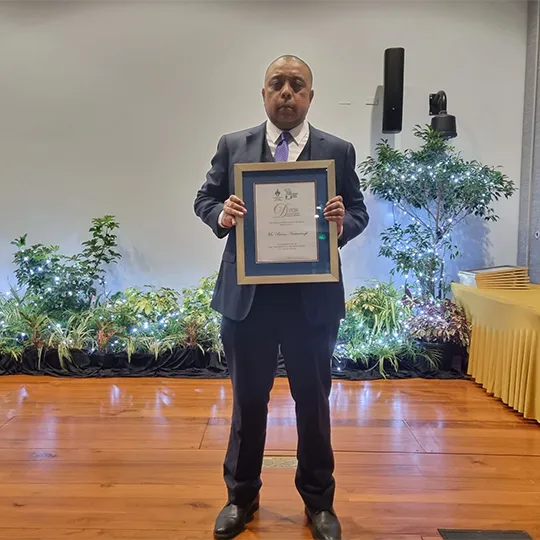
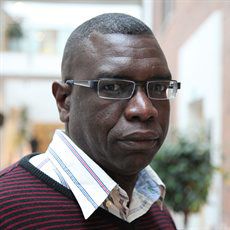
Michael Henry is an Associate Professor in Economics at the Department of Economics, Birmingham Business School, University of Birmingham. His research focuses on empirical economic analyses with applications in both developed and developing countries across multiple continents.
His educational background includes:
- BSc. (Hons) Economics from the University of the West Indies (UWI), Trinidad
- MSc. Economics from the University of the West Indies (UWI), Trinidad
- PhD in Economics from the University of Nottingham
Michael Henry's research interests center on empirical analyses of productivity and labour market effects of trade and investment liberalisation in developed and developing countries, both at the macro and microeconomic levels. His work involves the utilisation of household-level data to investigate issues such as youth unemployment, poverty and inequality, and the evaluation of conditional cash transfer programmes. His research spans international trade economics, development economics, and labor economics, with particular focus on Caribbean economies (especially Trinidad and Tobago), India, Jamaica, and Zambia. His methodological approach frequently employs panel data analysis and empirical econometric techniques to address complex economic questions.
His publication record shows consistent scholarly output in high-impact economics journals including Oxford Bulletin of Economics and Statistics, Journal of Comparative Economics, European Economic Review, and The Review of Economics and Statistics. His work demonstrates both theoretical rigor and practical policy relevance, addressing questions of trade competition, natural disaster impacts, household resource allocation, and economic development across diverse contexts. His research trajectory indicates a sustained commitment to understanding how economic policies affect real-world outcomes for households and firms in both developed and developing economies.
Michael Henry has established collaborative research networks across multiple countries, as evidenced by his co-authorship with researchers from various international institutions. His work bridges disciplinary boundaries between economics, public policy, and development studies, contributing to a more integrated understanding of economic phenomena in global contexts.