معرفی
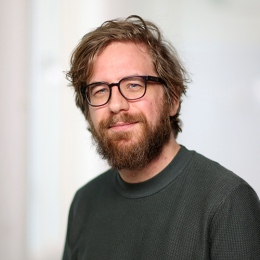
Michael Håkansson serves as a Senior Lecturer in didactics at the Department of Education, Stockholm University. His academic profile demonstrates significant expertise in environmental and sustainability education with a particular focus on developing students' political literacy through controversial political and sustainability issues. His research bridges theoretical frameworks from American pragmatism, political philosophy, and educational theory.
Dr. Håkansson's research explores the complex interrelations between Environmental and Sustainability Education (ESE/ESD), democratic pluralism, controversial political issues, and embodiment (aesthetics) in educational settings. His theoretical expertise centers on American pragmatists (particularly John Dewey), Chantal Mouffe's theory of agonistic pluralism, Bruno Latour, and Michel-Aldaheff-Jones. He has developed three influential analytical models: Political Tendency (showing how the political dimension appears in educational practices), Political moment (analyzing moments where students transform bodily sensations into political emotions), and Political commitments (examining teaching approaches involving political commitments).
Dr. Håkansson is actively involved in multiple research initiatives:
- Educational Research in Citizenship Competences (ERiCC)
- TePlab (Laboratory for Teaching Practices), connecting researchers from Uppsala University, Ghent University, Stockholm University, and Malmö University
- SEDwise: Sustainability education network focusing on teaching and learning with wicked socio-ecological problems
- Public pedagogy and sustainability challenges network gathering scholars from leading international universities
His current research is supported by significant funding:
- "Different manners of teaching dealing with controversial sustainability issues" (Vetenskapsrådet/The Swedish Science Council, 2018-2022)
- "Didactical models and learning study" (Stiftelsen Marcus och Amalia Wallenbergs minnesfond, 2018-2021)
Dr. Håkansson has designed and implemented two important academic courses: "Education for sustainable development" for practitioners developing sustainability in their professions and "Lead Learning for Sustainable Development for School Leaders" for educational leaders across the Swedish educational system. With a background as a primary school teacher qualified in Social Science, History, Religion and Geography, he brings 12 years of practical teaching experience from lower secondary schools in Stockholm and Uppsala municipalities to his academic work.