معرفی
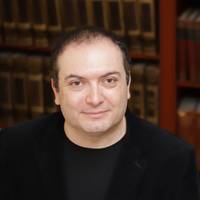
Michael Green is an Associate Professor at the University of Lodz, working within the Faculty of Philosophy and History at the Institute of History, specifically in the Philip Friedman Centre for Jewish Studies. He is a historian specializing in Early Modern society with extensive international experience across Switzerland, Germany, Denmark, Spain and Poland.
Green earned his PhD from the University of Groningen in the Netherlands and has established himself as a leading scholar in early modern privacy studies, Huguenot history, and Jewish history in the Netherlands. His research focuses on the intersection of social practices, religious communities, and notions of privacy in early modern Europe.
His scholarly work reveals a consistent focus on egodocuments (diaries, letters, memoirs) as primary sources for understanding private life in early modern contexts, particularly within religious minority communities. Green's research demonstrates how architectural changes, household practices, and epistolary traditions contributed to evolving concepts of privacy.
Green has produced a significant body of work including edited volumes on privacy in early modern correspondence and the Low Countries, numerous articles on Huguenot educational practices, Jewish history in Amsterdam, and the privacy aspects of diplomatic correspondence. His publications consistently explore how privacy functioned within religious minority communities and across social classes.
Through his podcast 'Historians in Conversation,' Green engages with prominent historians to explore academic career paths and professional challenges. The podcast features conversations with scholars from institutions including Erasmus University Rotterdam, University of Helsinki, and Boston College.
Green's research has been supported by prestigious institutions including the Centre for Privacy Studies at the University of Copenhagen. His work bridges disciplinary boundaries, connecting history with architectural studies, religious studies, and cultural anthropology to provide comprehensive insights into early modern social practices.