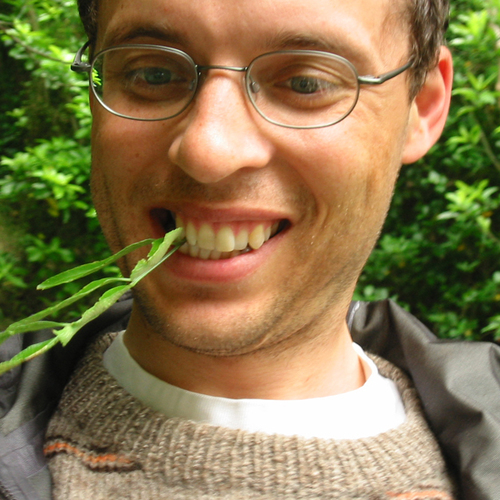
معرفی
Dr. Michael Cripps is a Senior Lecturer in the Department of Pest-Management and Conservation at Lincoln University, New Zealand, specializing in applied entomology and biological control of invasive pests and weeds for sustainable ecosystem management.
His educational background includes:
- PhD from Lincoln University, Lincoln, New Zealand
- MSc from University of Idaho, Moscow, United States
- BSc from University of Guelph, Guelph, Canada
Dr. Cripps' research centers on consumer-resource interactions, focusing on how natural enemies regulate pest and weed populations through host-parasite dynamics and biocontrol agent efficacy testing. He employs field surveys, ecological modeling, and molecular techniques to address invasive thistle management, particularly Cirsium arvense (Californian thistle) and Silybum marianum (variegated thistle), contributing to New Zealand's Zero Hunger goals through sustainable agricultural solutions. His work emphasizes non-target risk assessment and climate suitability for biocontrol agents.
Analysis of his 15 most recent publications (2019-2024) reveals consistent focus on thistle biocontrol systems, dominated by studies of the leaf beetle Cassida rubiginosa and gall fly Urophora stylata. His research integrates entomology, plant pathology, and ecology to evaluate agent impacts, non-target effects, and climatic constraints, with strong emphasis on New Zealand's pastoral ecosystems and practical weed management applications.
Dr. Cripps actively supervises Masters and PhD students and collaborates with industry partners. He serves on the editorial board of New Zealand Plant Protection and holds leadership roles including Past-President of the NZ Plant Protection Society (2017-present), NZ delegate to the Council of Australasian Weed Science Societies (2018-present), and NZ representative to the Asian-Pacific Weed Science Society (2019-present). He is organizing major international conferences including EMAPI 2025 at Lincoln University and the 17th International Symposium on Biological Control of Weeds (2026).