معرفی
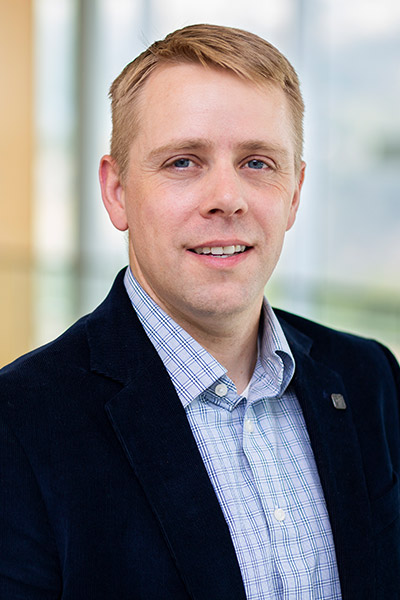
Michael C. Johnson is a Professor in the Department of Civil and Environmental Engineering at Utah State University (USU), affiliated with the Utah Water Research Laboratory (UWRL). He holds a PhD in Fluid Mechanics and Hydraulics from USU (1996), with research focused on hydraulic modeling, flow meter performance, valve analysis, and dam/spillway design. His work bridges physical and numerical methods, addressing challenges in water resources engineering and infrastructure.
Education:
- PhD, Fluid Mechanics and Hydraulics (Groundwater, Hydrology, Water Resources), Utah State University, 1996
- MS, Fluid Mechanics and Hydraulics, Utah State University, 1994
- BS, Civil and Environmental Engineering, Utah State University, 1992
Research Interests:
Johnson specializes in hydraulic structures, physical and computational fluid dynamics, flow meter calibration, and energy dissipation systems. His work emphasizes practical applications like spillway design, low-head dam safety, and turbine testing. Notable projects include the Lower Baker Dam Spillway model and Archimedes Turbine evaluations. His research often combines laboratory experiments with CFD simulations to optimize water infrastructure performance.
Recent Articles Trends:
His publications (2019–2025) highlight advancements in CFD modeling for pressure recovery, flow meter accuracy under disturbed conditions, and valve performance optimization. Key themes include improving meter testing protocols, mitigating turbulence effects, and enhancing hydraulic infrastructure resilience.
Awards and Recognition:
- Outstanding Graduate Mentor, 2020
- Multiple AWWA Best Paper Awards (2007, 2010, 2012)
- Outstanding Teacher Awards (2002–2003)
Advising & Labs:
Johnson has mentored over 25 graduate students, guiding research in areas like valve performance, spillway hydraulics, and meter calibration. He leads the UWRL’s hydraulics team, overseeing projects such as the Orville Dam Spillway model and large-scale physical modeling initiatives. His lab facilities support both experimental and computational approaches to water engineering challenges.