معرفی
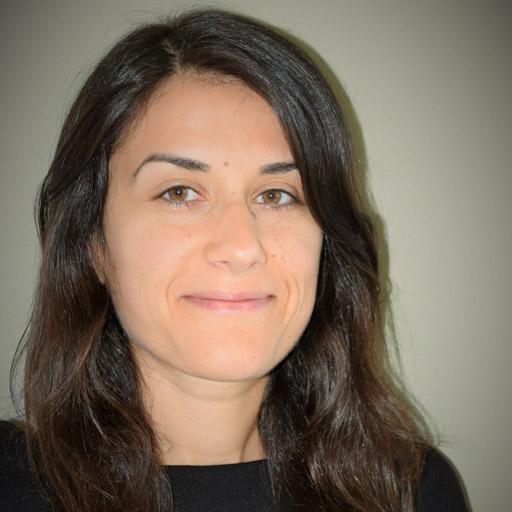
Michael Barringer is an Associate Research Professor in the Department of Mechanical Engineering at Pennsylvania State University's College of Engineering. His research focuses on gas turbine engineering with particular emphasis on heat transfer, aerodynamics, and sealing systems in turbine components. He is affiliated with the Integrated Energy Systems research theme and serves as an Affiliate Researcher at Penn State.
Dr. Barringer's research interests encompass multiple critical areas of gas turbine technology:
- Heat transfer measurement and analysis in turbine components
- Flow dynamics and sealing effectiveness in turbine rim seals
- Additive manufacturing applications for turbine airfoils and cooling systems
- High-pressure turbine design and performance optimization
- Cooling system development for gas turbine engines
- Sustainable propulsion technologies
His publication record spanning from 2009 to 2025 demonstrates an evolving research trajectory from fundamental flow dynamics to advanced manufacturing applications. Recent work focuses on additive manufacturing of turbine components, precision measurement techniques, and sustainable propulsion systems. The consistent publication in the Journal of Turbomachinery indicates deep expertise in turbomachinery design and testing.
Dr. Barringer has received significant recognition for his contributions to the field:
- ASME Fellow (2022)
His research has attracted substantial funding including a $1.5M NASA grant for sustainable aircraft research (2021) and participation in a $26M START Lab expansion for sustainable power and propulsion (2023). These projects demonstrate his leadership in advancing sustainable propulsion technologies. While specific students are not listed in available information, his extensive publication record with multiple co-authors suggests active mentorship of graduate students and postdoctoral researchers.
Dr. Barringer is affiliated with Penn State's advanced turbomachinery research facilities, contributing to the START Lab which received major expansion funding in 2023 to advance sustainable power and propulsion research. His work bridges fundamental fluid dynamics with practical engineering applications for next-generation turbine systems.