Melanie Beasley
استادیار · Paleoanthropology
Saint Francis Medical Center College of Nursingمعرفی
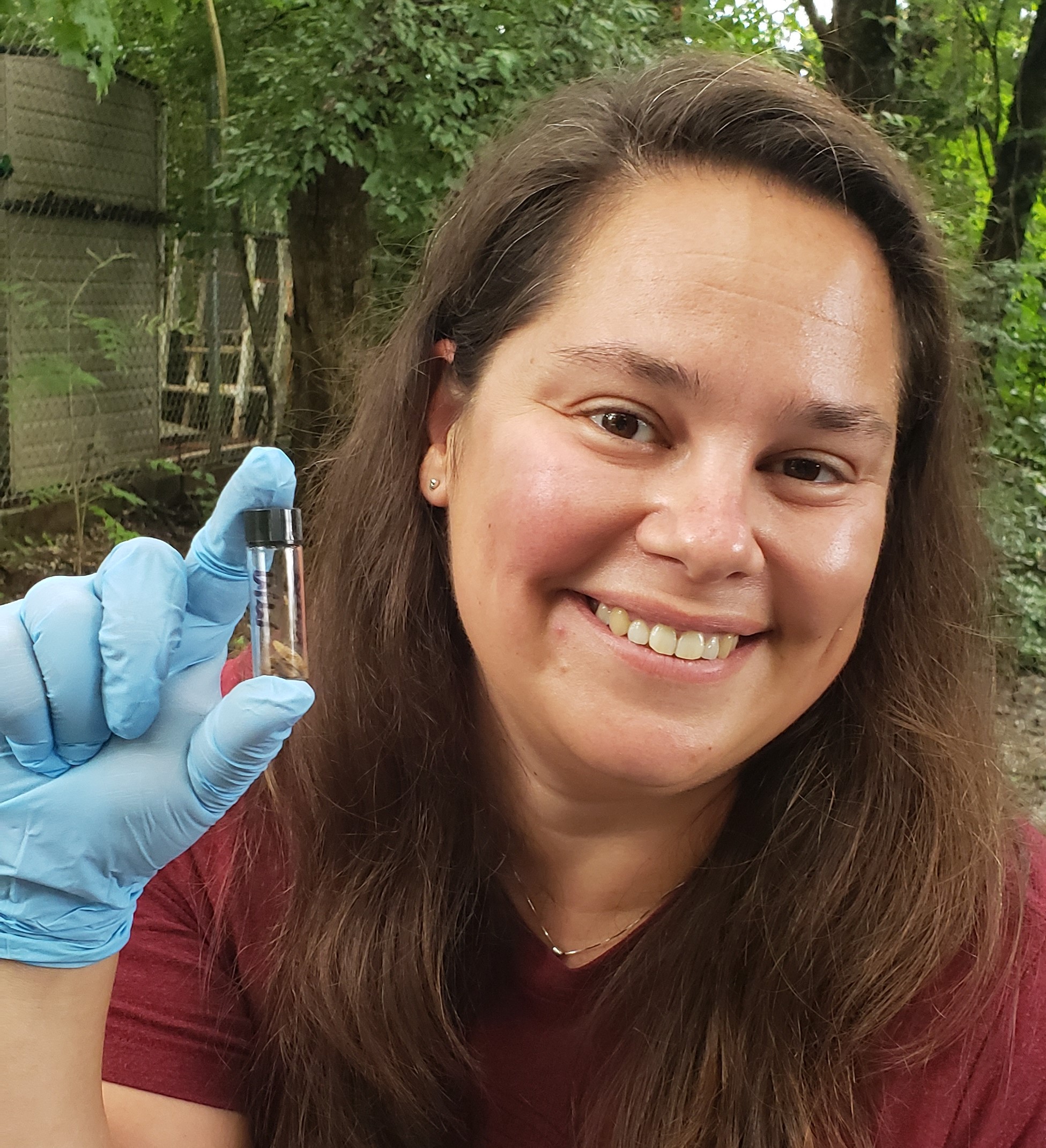
Melanie Beasley is an Assistant Professor of Anthropology at Purdue University, where she conducts research at the intersection of environmental science and human evolution. Her work spans multiple temporal frameworks, examining human-environment interactions from deep evolutionary history through to contemporary forensic contexts.
Dr. Beasley's research program centers on stable isotope geochemistry, particularly the analysis of nitrogen isotopes ($$\delta^{15}\text{N}$$) to reconstruct ancient diets and environmental conditions. She investigates how environmental factors shaped human evolutionary history, how humans influenced prey resource availability during the Holocene, and how environmental signatures become imprinted in biological tissues in modern forensic cases. Her innovative approach demonstrates how stable isotope analysis can address fundamental questions about human adaptation and evolution.
Her recent research has made significant contributions to understanding Neanderthal dietary practices. By analyzing how $$\delta^{15}\text{N}$$ values change during decomposition, she has proposed that consumption of maggots feeding on decomposing animal tissues could explain the traditionally high $$\delta^{15}\text{N}$$ values found in Neanderthal remains. This challenges previous interpretations that Neanderthals consumed a hypercarnivorous diet comparable to lions or hyenas.
- Research funding from the Haslam Foundation for her work on Neanderthal dietary reconstruction
Dr. Beasley actively engages in science communication through platforms like The Conversation, where she joined in July 2025. She advocates for "the Anthropology of Tomorrow" as an interdisciplinary field that blends social and natural sciences to address contemporary challenges and remain relevant to living communities. Her work bridges forensic anthropology, archaeology, and paleoanthropology to provide innovative insights into human evolutionary history.