معرفی
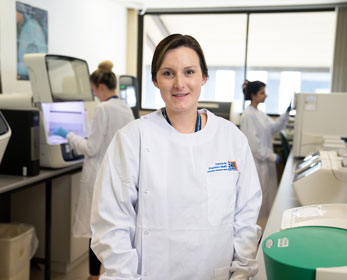
Mel Ziman is an Honorary Professor in the School of Medical and Health Sciences at Edith Cowan University (ECU), where she has built a distinguished academic career spanning over two decades. Her journey at ECU progressed from Lecturer (2001-2003) to Senior Lecturer (2003-2005), Associate Professor (2005-2013), Professor (2013-2020), and currently Honorary Professor (2020-present). Her research expertise centers on melanoma and Huntington's disease, with significant contributions to understanding the role of developmental genes in disease processes including cancer proliferation, differentiation, and migration.
Professor Ziman earned her Bachelor of Science Honours and Doctor of Philosophy from institutions in South Africa, completing her PhD in 1983. Her educational foundation has enabled her extensive research career focused on developmental genetics and its applications to human disease.
Her research program bridges basic science with clinical applications, investigating how developmental genes like PAX3/PAX7 contribute to cutaneous malignant melanoma and neurodegenerative conditions such as Huntington's disease. A major focus involves characterizing circulating cells in melanoma and exploring multidisciplinary therapy approaches for neurogenesis in Huntington's disease. She has pioneered work on liquid biopsy techniques using circulating tumor DNA (ctDNA) and circulating tumor cells (CTCs) for melanoma diagnosis and monitoring, while simultaneously investigating how structured rehabilitation programs impact disease progression in Huntington's patients.
Analysis of Professor Ziman's recent publication record reveals a strong emphasis on translational research with dual tracks in melanoma and Huntington's disease. Her melanoma work spans from fundamental research on developmental genes in cancer pathogenesis to clinical applications of liquid biopsy for disease monitoring and treatment response assessment. In Huntington's disease research, she has established a robust program investigating how multidisciplinary rehabilitation approaches affect brain structure, clinical outcomes, and quality of life in premanifest and manifest patients. This research demonstrates measurable impacts on hypothalamic volume preservation and dual-task performance.
Professor Ziman's exceptional contributions have been recognized with numerous prestigious awards:
- 2012: UniJobs Lecturer of the Year Award for the Top 10 Lecturers at ECU in 2011
- 2012: ECU award for Excellence in Postgraduate Supervision
- 2011: VC Excellence Award for Engagement in Research
- 2010: VC Citation for excellence in development of a Teaching and Research Nexus
- 2010: Citation for Outstanding Contribution to Student Learning – Australian Learning and Teaching
- 2008: VC Citation for excellence in development of a Teaching and Research Nexus
- 2008: Citation for Outstanding Contribution to Student Learning – Australian Learning and Teaching Council (Carrick)
- 2008: ECU Certificate of excellence in Learning and Teaching – UTEI over 85
- 2005: ECU award for Excellence in Postgraduate Supervision
As an educator and mentor, Professor Ziman has supervised numerous PhD and Master's students across diverse topics related to melanoma biology, Huntington's disease mechanisms, and diagnostic techniques. Her research program has attracted substantial funding exceeding $10 million from competitive sources including NHMRC, Cancer Council of WA, Lotterywest, and industry partners. These projects range from foundational research on developmental genes in cancer to clinical translation of liquid biopsy techniques and community implementation of rehabilitation protocols for Huntington's disease.
Professor Ziman's research teams operate at the intersection of basic science and clinical application, involving collaborations with clinicians, molecular biologists, and rehabilitation specialists. Her melanoma research group focuses on advancing liquid biopsy technologies for early detection and treatment monitoring, while her Huntington's disease team develops and evaluates multidisciplinary rehabilitation approaches that can be implemented in community settings to improve patient outcomes and quality of life.