معرفی
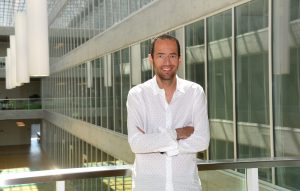
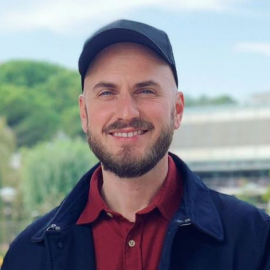
Mattia Vacchiano is a Lecturer in the Department of Sociology at the University of Geneva. He holds a PhD in Sociology from the Autonomous University of Barcelona (awarded 'Extraordinary Thesis' in 2019) and previously served as a Senior SNF Researcher at the University of Lausanne (2018-2021) and a Visiting Fellow at the University of Buenos Aires (2016). He is an active member of the Swiss Center of Expertise in Life Course Research (LIVES).
His research focuses on labor markets, digitalization, social networks and the life course, with particular emphasis on young people. He currently leads 'The Empty Office', an international study funded by the Swiss Network for International Studies analyzing teleworking's effects on social relations and well-being. He has published extensively in journals including Computers in Human Behavior, Advances in Life Course Research, Social Indicators Research, PLOS ONE, and BMJ Open.
His recent work demonstrates a clear trend toward investigating how digital work arrangements affect social connections and mental health, with an increasing focus on telework since the pandemic. His research integrates social network analysis with life course perspectives, creating innovative methodological approaches to understanding contemporary work-life dynamics.
- Extraordinary Thesis award (2019)
- Nominated for SAGE Prize for Innovation and Excellence by British Sociological Association (2023)
Dr. Vacchiano supervises bachelor's and master's theses on topics related to social networks, youth employment, and leisure studies. His current research is supported by multiple grants including the Swiss Network for International Studies project 'The Empty Office' and collaboration with the Federal Office of Public Health for systematic reviews on telework and well-being. He has collaborated with institutions across Europe including the University of Lausanne, Autonomous University of Barcelona, and International Labour Organization.
He leads the 'The Empty Office' research team, which includes collaborators from Switzerland, Spain, Germany, and the Netherlands, creating a multidisciplinary approach that combines sociology, public health, and labor economics to study telework's societal impacts.