معرفی
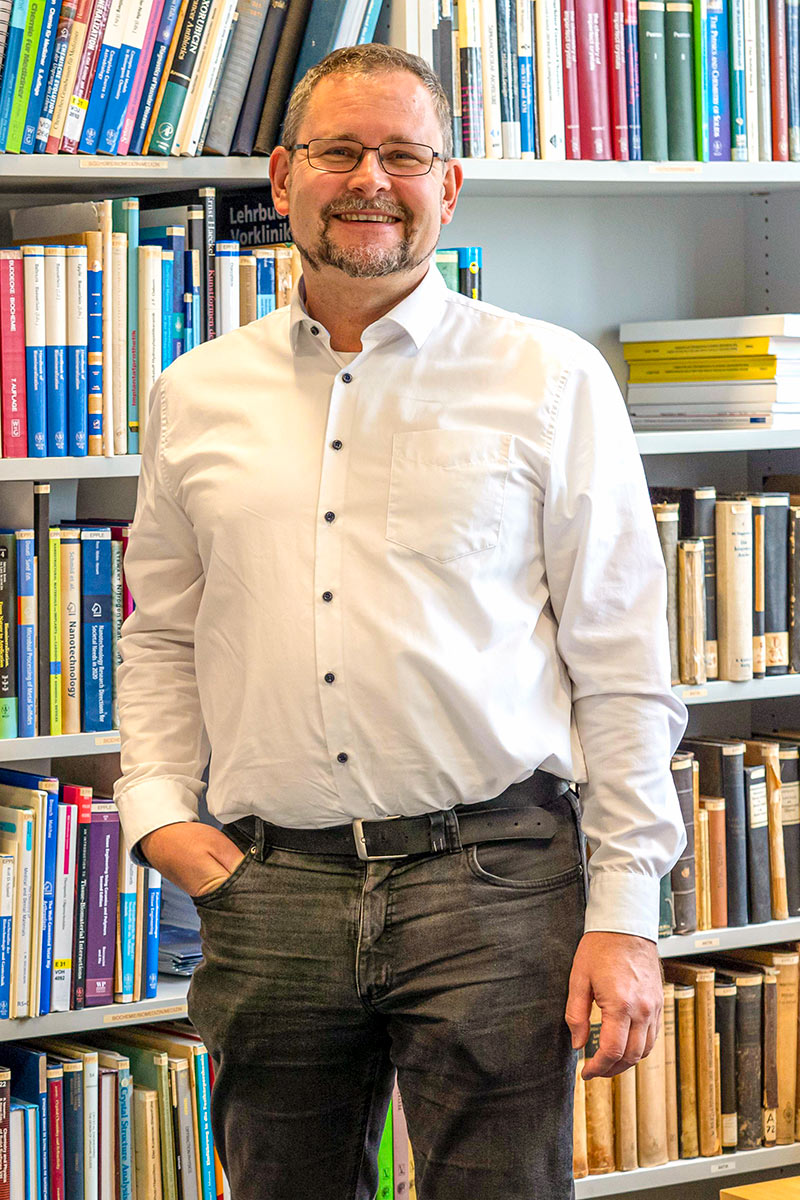
Prof. Dr. Matthias Epple is a full Professor in the Faculty of Chemistry at the University of Duisburg-Essen, where he leads the research group in Inorganic Chemistry. He has held this position since 2003 and was recently elected chairman of the university senate in October 2024. His research focuses on inorganic nanoparticles, particularly calcium phosphate and metallic nanoparticles, for biomedical applications.
Research Interests:
- Synthesis and functionalization of inorganic nanoparticles for gene and drug delivery
- Development of biomaterials in collaboration with physicians
- Study of biominerals and pathological crystallization using solid-state chemical methods
- Biomimetic crystallization of inorganic materials
- Reactivity of solids
The recent publications highlight a strong trend in nanomedicine, particularly the use of calcium phosphate nanoparticles for gene delivery, immunization, and targeted therapy. His work spans virology (e.g., hepatitis B), dentistry, inflammation, and cancer, with a focus on in vivo models and biodistribution studies. Imaging techniques such as PET/CT and electron microscopy are frequently employed.
Scientific Contributions:
- Extensive publication record in top journals like Acta Biomaterialia and Biomaterials
- Development of novel nanoparticle systems for transfection and immunization
- Interdisciplinary research bridging chemistry, medicine, and materials science
Prof. Epple actively supervises doctoral students and integrates teaching with research. He is involved in mentoring bachelor’s, master’s, and doctoral candidates, fostering the next generation of scientists. His group collaborates with medical professionals and maintains strong translational research goals. No major grants are explicitly mentioned, but the volume and consistency of publications suggest sustained funding.
Laboratory and Team: The AK Epple group includes postdoctoral researchers, doctoral students, technical staff, and visiting scientists. The laboratory is equipped for nanoparticle synthesis, chemical analysis (X-ray structure analysis, scanning electron microscopy), and biological testing.
حوزههای پژوهشی