معرفی
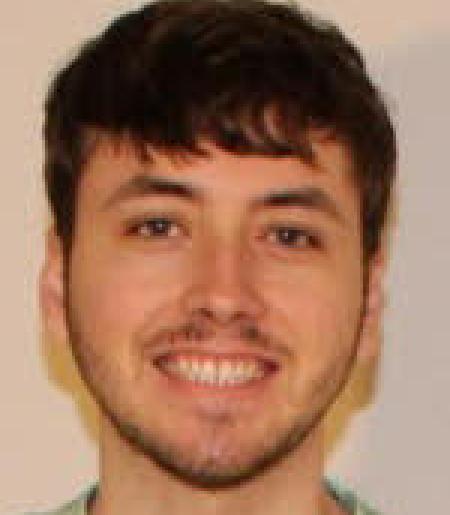
Matteo Cremonesi is an Assistant Professor in the Department of Physics at Carnegie Mellon University's Mellon College of Science, where he has been faculty since 2023. His research focuses on high energy physics experiments, particularly dark matter searches at the Large Hadron Collider (LHC) and the development of advanced machine learning techniques for particle physics data analysis. He is an active member of the Compact Muon Solenoid (CMS) experiment at CERN.
Dr. Cremonesi's educational background includes:
- Ph.D. in Physics from the University of Oxford (2014)
- M.S. in Physics from the University of Rome II (2012)
- B.S. in Physics from the University of Rome II (2009)
Before joining Carnegie Mellon, Dr. Cremonesi held several prestigious research positions:
- LHC Physics Center Artificial Intelligence Fellow & Research Associate at University of Notre Dame (2021-)
- Research Associate at Fermi National Accelerator Laboratory (FNAL) (2015-2021)
- Fellow at Harvard University Department of Physics (2013)
As an experimental particle physicist, Dr. Cremonesi's research centers on studying fundamental particles and searching for physics beyond the Standard Model, with particular emphasis on dark matter. His work involves analyzing data from the CMS experiment at CERN's LHC, where he has made significant contributions to dark matter searches using missing transverse momentum (MET) techniques. Dr. Cremonesi has pioneered the application of graph neural networks for MET reconstruction, significantly improving the sensitivity of dark matter searches. He previously contributed to top quark physics research as a member of the Collider Detector at Fermilab (CDF) experiment, helping to discover a predicted production mechanism of the top quark.
Dr. Cremonesi's publication record demonstrates a consistent focus on advancing particle physics methodology and searching for new physics phenomena. His recent work shows an increasing emphasis on machine learning applications in high energy physics, particularly graph neural networks for particle reconstruction tasks. His research spans both theoretical aspects of particle physics and practical detector development, with a strong focus on data analysis techniques that push the boundaries of what can be measured at particle colliders. The breadth of his publications indicates active collaboration across multiple experimental fronts within the CMS collaboration.
Professional Recognition:
- Selected as CMS delegate to the LHC Dark Matter Working Group
- Former leader of the MET group of the CMS experiment (2020-2022)
Dr. Cremonesi has been actively involved in advancing the technical capabilities of particle physics experiments, particularly in the areas of data analysis frameworks and machine learning applications. His work on the Coffea framework and Big Data technologies for High Energy Physics analysis demonstrates his commitment to developing innovative computational approaches for handling the massive datasets generated by modern particle physics experiments. His leadership of the MET group at CMS highlights his recognized expertise in a critical area of particle physics analysis.
Dr. Cremonesi's laboratory work primarily involves collaboration with the CMS experiment at CERN, where he contributes to the development and operation of detector systems and analysis frameworks. His research group at Carnegie Mellon focuses on applying advanced machine learning techniques to particle physics problems, with particular emphasis on real-time data processing for trigger systems and offline analysis improvements.