معرفی
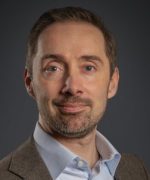
Mathijs van Dijk is a Full Professor of Finance at the Rotterdam School of Management (RSM), Erasmus University, and serves as Scientific Director at the pension think tank Netspar. His work bridges academic research and practical policy, focusing on sustainable finance and climate risk.
- Full Professor, Department of Finance, Rotterdam School of Management, Erasmus University
- Scientific Director, Netspar (Network for Studies on Pensions, Aging and Retirement)
His research interests lie primarily in sustainable investments, climate finance, ESG integration, asset pricing, and investor behavior. He investigates how financial systems can support long-term societal goals, particularly in the context of climate change and inclusive prosperity. His work contributes to UN Sustainable Development Goals related to responsible consumption, climate action, and reduced inequalities.
The recent articles highlight a strong trend toward climate risk assessment, ESG performance, and the reformulation of traditional asset pricing models. His publications emphasize empirical analysis of financial markets, with a growing focus on sustainability metrics, long-horizon portfolio decisions, and systemic risk under climate stress. He frequently collaborates with leading scholars and institutions globally.
- GRASFI Annual Meeting - Best Paper Award (2021)
Mathijs van Dijk has secured significant research funding, including a €600,000 Vidi grant from the Netherlands Organisation for Scientific Research (NWO) in 2008 for research on 'Liquidity Black Holes'. He has supervised 25 research students and serves as a mentor in the academic community. He was an editor of the Journal of Empirical Finance from 2017 to 2023, contributing to the peer-review infrastructure of the field. His public engagement includes TEDx talks, media appearances, and policy-relevant publications.
He is actively involved in research networks and collaborations across Europe and the United States, including affiliations with institutions such as Princeton, UCLA, and Duke. His work is disseminated through academic journals, policy papers, and public forums, ensuring broad impact across academia, industry, and government.