معرفی
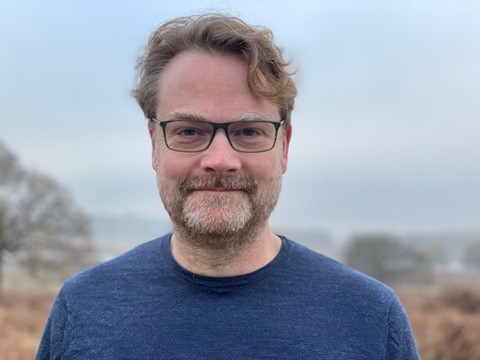
Mathias Bonde Korsgaard is Associate Professor of Online Video Cultures at the Department of Media and Journalism Studies, School of Communication and Culture, Aarhus University. He is internationally recognized for his work in music video studies and audiovisual media, contributing significantly to the revitalization of the field in the digital age.
- Institution: Aarhus University
- School: School of Communication and Culture
- Department: Department of Media and Journalism Studies
- Position: Associate Professor
- Email: mbk@cc.au.dk
- Office: Helsingforsgade 14, 8200 Aarhus N, Denmark
His research focuses on music video, film analysis, audiovisual studies, and videographic criticism. He has published extensively, including the monograph Music Video After MTV (Routledge, 2017), and co-edited Traveling Music Videos (Bloomsbury, 2024) and the forthcoming Nordic Music Videos (Routledge). He is editor-in-chief of the Danish online film journal 16:9, where he also practices audiovisual essay-making.
The recent articles show a strong trend in the analysis of music videos, Nordic audiovisual culture, and the scholarly use of video essays. His work spans film studies, media theory, digital aesthetics, and cultural criticism, often intersecting with public engagement through podcasts, workshops, and media commentary. He explores how digital platforms like YouTube and TikTok reshape audiovisual expression and cultural memory.
Scientific awards and honors:
- No specific awards mentioned in the provided text.
Korsgaard has been involved in academic mentoring and public education through teaching and media appearances. He led the research project 'Audiovisual Literacy and New Audiovisual Short-Forms' (2016–2020) and has supervised or co-taught courses such as Media Text Analysis I. He frequently contributes to public discourse through lectures, interviews, and press engagements. His work bridges academic scholarship with creative practice and public outreach.
He is actively engaged with the 16:9 journal, which serves as a platform for both scholarly and audiovisual contributions, effectively functioning as a research lab for videographic criticism. Through this outlet and his project work, he fosters a collaborative network across film, media, and music scholarship, particularly in the Nordic region.