معرفی
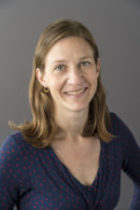
Mary Heskel is an Associate Professor in the Department of Biology at Macalester College in Saint Paul, Minnesota, currently on sabbatical. Her research focuses on how plants cycle and store carbon in ecosystems under climate change, including warming, higher CO2 levels, increased soil nitrogen, and drought.
Her educational background includes a PhD in Ecology, Evolution, and Environmental Biology from Columbia University (2013), an MA in Secondary Science Education from City College of New York (2008), and a BA in Biology and History of Art from the University of Pennsylvania (2006). She completed postdoctoral positions at the Marine Biological Laboratory (The Ecosystems Center) and the Australian National University.
Heskel's research spans multiple ecosystems, from Arctic tundra to urban landscapes in the Twin Cities. Her work examines plant responses to environmental changes across scales, from cellular processes to ecosystem-level carbon cycling. Key research themes include plant acclimation to temperature changes, light suppression of respiration, and carbon cycling responses to elevated CO2. She combines field measurements with statistical modeling to understand how plants respond to climate change impacts.
Her most recent publications focus on using radiocarbon to track environmental inequity in urban plants, photosynthesis in understory woody species across seasons, and Arctic research examining reindeer migration patterns in relation to climate change and infrastructure development in Scandinavia. Her work shows a clear trend toward examining the intersection of climate change impacts with social and environmental justice issues in urban settings.
- NSF grant (2022-2027) studying reindeer migration, Indigenous groups, and shrub growth in Scandinavia
- Member of the NSF-funded EVOME Institute for Arctic Alaska research
- Urban ecological research examining air quality patterns in relation to historical redlining
Heskel actively mentors undergraduate students, with multiple Macalester students appearing as co-authors on her publications. Her lab provides research opportunities for students to engage in novel research directions, including using satellite data for environmental justice research and examining impacts of urban tree removal on environmental variables. She emphasizes student-centered research and has developed projects that allow undergraduates to take leadership roles in innovative ecological investigations.