معرفی
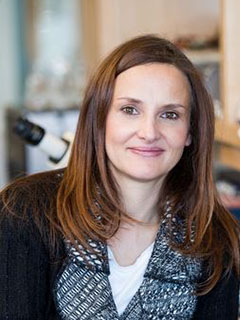
Mary Dolan is a Professor in the Medicine-Hematology and Oncology department at the University of Chicago's Pritzker School of Medicine. Her research focuses on improving cancer patients' quality of life through identifying genetic variants associated with risk for severe and persistent toxicities following chemotherapy, particularly in children and young adults. The Dolan Lab performs clinical genome wide association studies (GWAS) to identify genetic variants associated with toxicity in patients following chemotherapy and develops preclinical models to elucidate the biochemical and cellular impact of these genes.
- University of Dayton, Dayton, OH BS 04/1979 Chemistry
- Purdue University, West Lafayette, IN PHD 12/1983 Medicinal Chemistry
- Pennsylvania College of Medicine, Hershey, PA Post Doc 01/1986 Biochemical Pharmacology
Dr. Dolan's research interests center on pharmacogenomics of chemotherapy-induced toxicities, with particular emphasis on peripheral neuropathy, ototoxicity, and tinnitus. Her laboratory made the seminal observation that chemotherapeutic-induced cytotoxicity is a heritable trait and that pharmacologic SNPs identified through GWAS are enriched in expression quantitative trait loci. She has developed an induced pluripotent stem cell derived neuronal cell model to evaluate genes contributing to chemotherapeutic-induced neuropathy. Her work integrates multiple large datasets including genetic variation, gene expression, miRNA, modified cytosine, transcription factor levels and chemotherapeutic induced pharmacologic traits. Dr. Dolan's laboratory is pioneering the use of machine learning to build predictive models for identifying patients at greatest risk for severe toxicities.
Analysis of Dr. Dolan's recent publications reveals a strong focus on chemotherapy-induced neurotoxicities, particularly those caused by cisplatin treatment. Her research spans from identifying genetic variants associated with toxicity risk through GWAS studies to developing stem cell models for understanding the mechanisms of toxicity. A significant portion of her work examines ototoxicity, tinnitus, and peripheral neuropathy in cancer survivors, with increasing attention to diverse populations and long-term survivorship issues. Her research portfolio demonstrates a progression from basic pharmacogenomic discovery to clinical implementation and translation into predictive models.
- 2024 Margaret L. Kripke Legend Award, MD Anderson
- 2024 Comprehensive Cancer Center Distinguished Service Award, University of Chicago
- 2023 Department of Medicine Distinguished Service Award, University of Chicago
- 2021 Biological Sciences Division Distinguished Leader in Diversity and Inclusion, University of Chicago
- 2019 Comprehensive Cancer Center Women's Board Scholar, University of Chicago
Dr. Dolan has secured substantial funding for her research, including multiple NIH R01, R21, and R25 grants as Principal Investigator spanning from 2000 to 2030. Her current projects include modeling vincristine-induced neuropathy, Chicago EYES (Educators and Youth Enjoy Science) on Cancer, and Komen Graduate Training in Disparities Research. She has mentored numerous students and postdoctoral fellows, with evidence of strong educational contributions reflected in her 2016 Biological Sciences Division Distinguished Educator/Mentor award. Her grant portfolio demonstrates sustained funding support for over three decades, highlighting the significance and impact of her research program.
The Dolan Lab operates at the intersection of pharmacogenomics, oncology, and translational medicine. Her team develops and utilizes advanced models including induced pluripotent stem cell derived neuronal cells to evaluate genes contributing to chemotherapeutic-induced neuropathy. The lab integrates multiple large datasets and employs machine learning approaches to build predictive models for identifying patients at greatest risk for severe toxicities. Her Chicago EYES on Cancer program demonstrates a strong commitment to fostering diversity in biomedicine through cancer research training for students and teachers.
حوزههای پژوهشی