معرفی
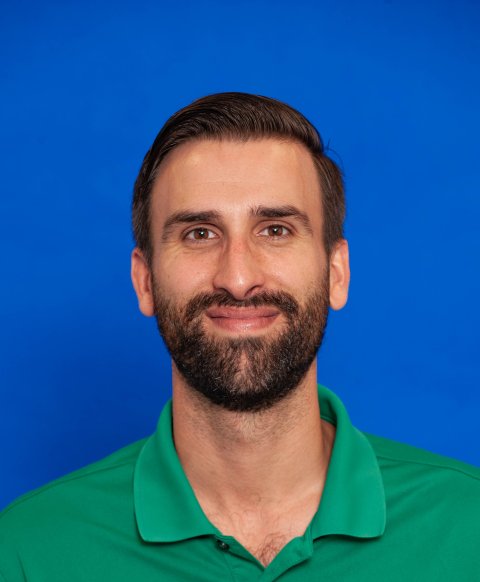
Martin Stute serves as the Alena Wels Hirschorn '58 and Martin Hirschorn Professor in Environmental and Applied Sciences and Co-Chair of the Department of Environmental Science at Barnard College. He holds concurrent appointments as Adjunct Senior Research Scientist at the Lamont-Doherty Earth Observatory and faculty member in Columbia University's Department of Earth and Environmental Science. Professor Stute has been teaching at Barnard since 1993, becoming full-time faculty in 1995.
His educational background includes a BS from the University of Münster (Germany) and MA/PhD from the University of Heidelberg (Germany). His doctoral research pioneered novel tracer techniques for studying groundwater flow dynamics and using groundwater as paleoclimate archives.
Professor Stute's research spans water resources, contaminant transport in groundwater, carbon sequestration, unconventional gas production, paleoclimate reconstruction, and mathematical modeling of environmental phenomena. His work frequently employs environmental tracer methodologies to investigate hydrological systems and climate history. Current projects include the LDEO Environmental Tracer Group, Health Effects of Geochemistry of Arsenic Manganese studies, New Jersey Arsenic Awareness Initiative, Carbfix project in Iceland, and the Big Sky CCUS Partnership.
His publication record demonstrates consistent contributions to hydrogeology and environmental science since the early 1990s, with recent work focusing on carbon sequestration techniques and arsenic contamination mechanisms. Professor Stute teaches Environmental Data Analysis, Hydrology, Workshop in Sustainable Development, and leads the joint Columbia/Barnard Senior Research Seminar.
As Co-Chair of the Environmental Science Department, Professor Stute oversees curriculum development and faculty coordination while maintaining an active research program. His mentorship approach emphasizes professional communication, meticulous documentation, and integration of field, laboratory, and computational methods. Students working with him gain access to Lamont-Doherty's analytical facilities and participate in international research projects spanning Bangladesh, Hungary, Iceland, and the American West.
The LDEO Environmental Tracer Group under his leadership provides students with hands-on experience in noble gas analysis, isotope hydrology, and environmental modeling. Professor Stute encourages thesis students to pursue publication opportunities and conference presentations, with travel support available through Columbia's Earth Institute resources.