معرفی
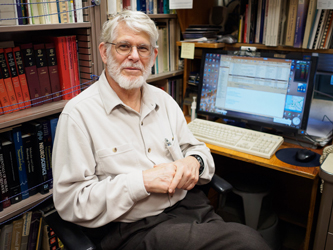
Martin Müller serves as Associate Professor at the Department of Molecular Life Sciences, University of Zurich, where he leads the Müller Lab investigating synaptic mechanisms since 2013. His research focuses on molecular underpinnings of neural circuit stability through homeostatic compensation.
His academic trajectory includes:
- Master Program in Neural and Behavioral Sciences, University of Tübingen (2001-2004)
- PhD research on short-term synaptic plasticity at Max Planck Institute for Biophysical Chemistry (Göttingen) and EPFL (Lausanne) (2004-2008)
- Postdoctoral fellowship on homeostatic plasticity with Grae Davis at UCSF (2008-2013)
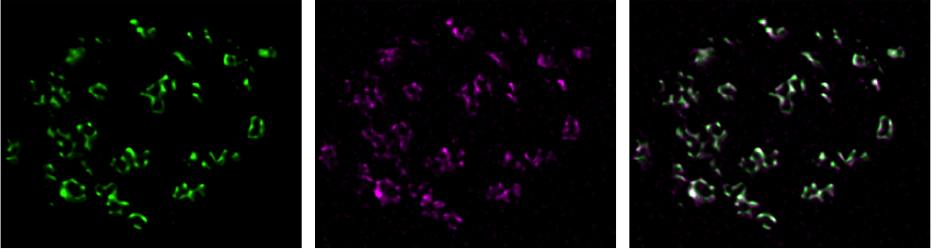
Müller's work centers on presynaptic mechanisms in homeostatic plasticity, utilizing Drosophila and mammalian models to dissect molecular pathways governing neurotransmitter release. His lab employs electrophysiology, genetics, and imaging to study active zone organization, vesicle dynamics, and transsynaptic signaling. Key contributions include identifying roles for RIM-binding proteins, E3 ligases, and ion channels in synaptic stabilization.
Analysis of his 2011-2022 publications reveals progressive molecular dissection of homeostatic plasticity, evolving from foundational mechanisms to human-relevant mutations like CORD7. His work consistently bridges synaptic physiology with neurodegenerative implications, demonstrating how proteasome function, vesicle pools, and nanodomain organization maintain neural circuit function.
His scientific recognition includes:
- SNSF Professorship (2013-2022)
Müller's independent research program, established through SNSF funding, directs the Müller Lab's investigations into synaptic homeostasis. His group trains graduate students and postdocs in molecular neuroscience techniques while securing competitive grants for ongoing studies of presynaptic function. Current work explores nanoscale synaptic architecture and its relevance to cognitive disorders.
The Müller Lab operates within the University of Zurich's Department of Molecular Life Sciences, maintaining active collaborations with international neuroscience groups. The team combines in vivo and in vitro approaches to investigate how synapses achieve functional stability through molecular compensation mechanisms.