معرفی
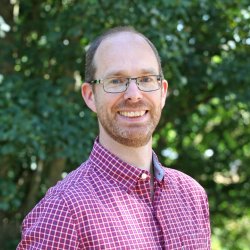
Martin Gibala is a Professor in the Department of Kinesiology at McMaster University, where he leads research examining the effects of exercise at molecular to whole-body levels in both healthy individuals and those with chronic diseases. His work spans basic mechanistic studies on skeletal muscle energy metabolism to applied research on physical training and nutrition for health and performance optimization.
Dr. Gibala earned his Bachelor of Human Kinetics from the University of Windsor, followed by an M.Sc. from McMaster University and a Ph.D. from the University of Guelph. He completed a postdoctoral fellowship at the Copenhagen Muscle Research Centre, establishing the foundation for his expertise in exercise physiology.
His primary research focuses on high-intensity interval training (HIIT) and time-efficient exercise protocols, demonstrating that brief, intense exercise can produce comparable health benefits to traditional longer-duration workouts. His laboratory investigates skeletal muscle metabolism, exercise adaptations, and practical applications of time-efficient training for diverse populations. Dr. Gibala has made significant contributions to understanding how short bursts of vigorous activity ("exercise snacks") can improve cardiometabolic health, glycemic control, and overall fitness with minimal time commitment.
Analysis of Dr. Gibala's recent publications reveals an evolving research trajectory with increasing emphasis on technology-enabled exercise interventions, sex-specific responses to training, and practical implementation of time-efficient protocols in real-world settings. His work bridges basic exercise science with public health applications, particularly focusing on making exercise more accessible through time-efficient approaches.
Dr. Gibala is also recognized for science communication, having co-authored the popular science book "The One-Minute Workout: Science Shows a Way to Get Fit That's Smarter, Faster, Shorter" (Penguin Random House, 2017). His research has been widely covered in media outlets and has influenced public understanding of time-efficient exercise approaches.
As an educator, Dr. Gibala teaches courses including Cardiorespiratory and Metabolic Exercise Physiology, Exercise Metabolism, and Integrative Exercise Physiology. His laboratory at McMaster University conducts both basic and applied research on exercise physiology, with particular focus on skeletal muscle metabolism, high-intensity interval training, and practical applications of time-efficient exercise protocols for improving health and performance in various populations.