معرفی
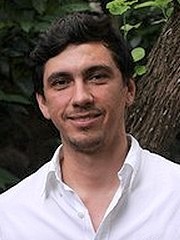
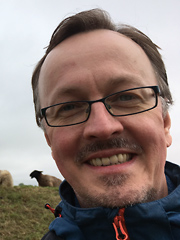
Dr. Martin Döring is a Research Associate in the Department of Earth System Sciences at the University of Hamburg, affiliated with the MIN Faculty. He is actively involved in the Cluster of Excellence 'Climate, Climatic Change, and Society' (CLICCS), where he serves as Project Manager for the C3 project and contributes to the Climate Fit initiative. His work is centered at the Geomatikum in Hamburg, within Prof. Dr. Beate Ratter’s research group.
His research focuses on the intersection of society and environment, particularly through the lenses of human-nature interaction, climate perception, and coastal research. He investigates how cultural, linguistic, and regional identities shape responses to climate change, especially in vulnerable coastal regions like North Frisia. His approach integrates ecolinguistics, socio-geographical analysis, and participatory methods to understand place-based adaptation and science-society dialogue.
The recent publications (2015–2024) reflect a strong trend toward interdisciplinary climate research, emphasizing stakeholder engagement, renewable energy transitions, and the socio-cultural dimensions of adaptation. His work frequently appears in journals related to environmental policy, geography, and sustainability science, often in collaboration with Beate Ratter and other CLICCS researchers.
Dr. Döring is actively engaged in academic service, serving as co-editor of the online journal metaphorik.de and several book series including MatteRealities/VerKöperungen and Ecolinguistic Matters. He has contributed to public discourse through media appearances, including interviews with Deutschlandfunk on coastal protection and climate futures. He has not received any explicitly mentioned scientific awards. While his advisory role to students is not detailed, his leadership in research projects and editorial roles indicate significant academic mentorship and collaboration.
He is part of the UNESCO Chair network under Prof. Dr. Ratter and contributes to interdisciplinary teams such as HEART and CLICCS, which focus on climate resilience and transformation. His work bridges natural and social sciences, aiming to foster sustainable and socially inclusive climate adaptation strategies.