معرفی
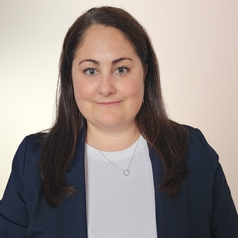
Marlène KARAM is an Associate Professor at the Faculty of Nursing Sciences (Faculté des sciences infirmières) at the Université de Montréal. Her research focuses on interprofessional collaboration, care coordination, and continuity of care, particularly for patients with complex needs in primary healthcare settings. She holds a PhD in Public Health from Université catholique de Louvain (Belgium) and completed a postdoctoral fellowship at Université de Sherbrooke (QC, Canada).
Affiliations: Member of the Centre de recherche de l'Hôpital Maisonneuve-Rosemont (CRHMR), Réseau de recherche en interventions en sciences infirmières du Québec (RRISIQ), and Centre d'innovation en formation infirmière et apprentissage professionnel (CIFI-AP). Collaborates with institutions like the CIUSSS de l'Est-de-l'Île-de-Montréal and the MSSS/Ministère de la Santé et des Services sociaux.
Research Highlights: Leads projects addressing care coordination by nurses, interprofessional collaboration, and complex patient management. Recent studies include optimizing care transitions and evaluating patient engagement in healthcare programs. Her work emphasizes participatory approaches and qualitative research methods.
Awards: Recipient of the Prix Paul Mahieu (2005) for academic excellence in her specialization in intensive care and emergency nursing.
Teaching: Teaches courses in healthcare administration, including SOI-6309 (Stage en administration des services infirmiers) for the Maîtrise en administration des services de santé program.
Grants & Funding: Secured over CAD 1.2 million through grants from Fonds de recherche du Québec (FRQSC), Conseil de recherches en sciences humaines (CRSH), and Instituts de recherche en santé du Canada (IRSC). Projects include developing frameworks for nurse training in care coordination and analyzing complex care pathways.
Labs & Teams: Engages with interdisciplinary teams like the Be.Hive Chaire interdisciplinaire (Belgium) and the PriCare research program, focusing on strengthening primary healthcare systems and patient-centered approaches.