معرفی
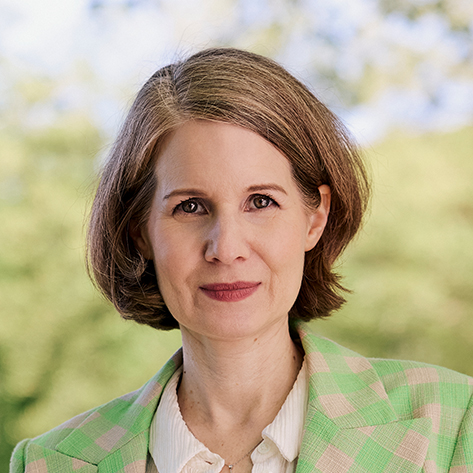
Dr. Marlène Gerber serves as Deputy Director of the Année Politique Suisse (Swiss Political Yearbook) at the Institute of Political Science, University of Bern. She holds a Doctorate in Social Sciences (Dr.rer.soc.) from the University of Bern, where she completed her PhD thesis in 2013 on deliberation potential among EU citizens, funded by the Swiss National Science Foundation. Her academic journey began with studies in political science, geography, and international humanitarian law at the University of Bern (2004-2010), including an exchange semester at the University of Helsinki.
Her research expertise centers on deliberation, direct democracy, digital democratic innovations, and women's and gender equality issues. She has contributed extensively to Swiss political discourse through her editorial work with the Année Politique Suisse, where she has authored sections on social groups (asylum, migration, families, gender equality), spatial planning, media, environment, and culture since 2009.
Dr. Gerber's scholarly work demonstrates a consistent focus on gender dynamics in political participation, as evidenced by her analysis of women's presence in parliamentary debates and citizen assemblies. Her recent research explores digital democratic innovations and their potential to enhance citizen engagement in the political process. She has led significant research projects including 'Digital Democratic Innovations to Empower Citizens in the Digital Age' (2020-2024) and 'Echo- vs. Deliberative Chambers' (2018-2020), both funded by the Swiss National Science Foundation.
- Notable Publications Trend: Her work consistently bridges theoretical political science with practical democratic innovations, particularly examining how gender dynamics shape political participation and how digital tools can enhance democratic processes while addressing inclusion challenges.
Dr. Gerber has actively contributed to public discourse through DeFacto, FemInfo, and other platforms, translating academic insights into accessible political analysis for broader audiences. Her teaching portfolio at the University of Bern demonstrates her commitment to training the next generation of political scientists in research methodology and empirical analysis.