معرفی
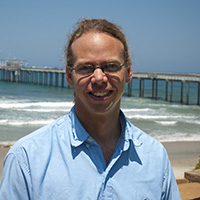
Marleen Stuhr is a Senior Scientist at the Leibniz Centre for Tropical Marine Research (ZMT) in Bremen, Germany, where she leads research in Programme Area 4 (Ecosystem Co-Design towards a sustainable Anthropocene) within the Working Group on Geoecology and Carbonate Sedimentology. Her work focuses on climate change impacts on coral reef ecosystems, particularly through the lens of photosymbiotic organisms and carbonate sediment systems.
Her primary research interests include:
- Adaptation mechanisms of photosymbiotic reef organisms to environmental stressors
- Effects of ocean acidification and warming on calcifying organisms
- Resilience and conservation of coral reef ecosystems
- Innovative proteomic approaches for studying marine holobionts
- Carbonate sediment production and transport dynamics
Dr. Stuhr's publication record reveals strong trends in climate change physiology, with recent emphasis on multi-stressor experiments (warming + acidification), nanoplastic pollution impacts, and carbonate sediment budget modeling. Her work bridges molecular biology (proteomics/metabolomics) with ecosystem-scale processes, particularly in the Red Sea and Chagos Archipelago.
She leads several significant postdoctoral projects including FuRI (Future trajectories of coral reef islands), ChagosSand (carbonate sediments in Chagos), RedSeaForams (foraminifera in Red Sea), and COrALesilience (coral bleaching recovery). Her research integrates field expeditions, laboratory experiments, and advanced analytical techniques like LC-MS metabolomics and shotgun proteomics.
Dr. Stuhr maintains active collaborations across international institutions and contributes to major field protocols like SedBudget for reef carbonate assessment. Her work appears in high-impact journals including Scientific Reports, Coral Reefs, and Journal of Advanced Research, with consistent first-author publications demonstrating leadership in her field.