
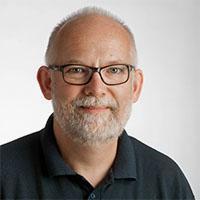
Mark-Oliver Rödel
پژوهشگر · Amphibian Ecology
Leibniz Institute for Research on Evolution and Biodiversity at the Humboldt University Berlinمعرفی
Dr. Mark-Oliver Rödel is a prominent herpetologist and researcher at the Museum für Naturkunde (Leibniz Institute for Evolution and Biodiversity Science) in Berlin, Germany, where he has served as Curator of Herpetology since 2007. He also lectures for master courses at Humboldt University and the Gorongosa Restoration Project in Mozambique. His research focuses on amphibian ecology, biodiversity conservation, and responses to environmental changes across Africa, with particular emphasis on West African ecosystems.
Dr. Rödel completed his biology studies at Universität Tübingen (1987-1993), earned his Diplom in 1994 with research on Phrynomantis microps breeding behavior in Comoé National Park, and completed his PhD at Universität Würzburg (1995-1998) on tadpole communities in West African savannas. He achieved his Habilitation in 2006 with the thesis "Tropical Amphibian Communities: Taxonomy, Structure and Functionality along Habitat- and Disturbance Gradients" and briefly held a W2 professorship at Universität Würzburg before joining the Museum für Naturkunde.
His primary research investigates how amphibian and reptile communities respond to environmental changes including climate change, logging, and unsustainable resource use. Dr. Rödel employs diverse methodologies including empirical and experimental field studies across multiple African countries (particularly Côte d'Ivoire, Guinea, and Ghana), ecological modeling, morphological analysis, and molecular approaches. His work spans taxonomic documentation, biogeographic patterns, and conservation applications, with extensive long-term monitoring in African national parks.
Analysis of Dr. Rödel's recent publications reveals a strong focus on anthropogenic impacts on amphibians, particularly forest fragmentation and urbanization effects. His research demonstrates how amphibian communities change along environmental gradients and how individual species adapt to changing conditions through both plastic responses and potential evolutionary changes. His work combines long-term field monitoring with cutting-edge analytical techniques to understand both immediate and evolutionary responses to environmental change.
Dr. Rödel leads multiple long-term research projects including studies on common frogs and fire salamanders in Bavaria, population dynamics of the viviparous Nimba toad in Guinea, and community responses to habitat changes in African national parks. His working group includes students and researchers from around the world, with emphasis on building research capacity in tropical countries where his fieldwork occurs.
Based at the Museum für Naturkunde, Dr. Rödel oversees significant herpetological collections while conducting extensive field research across Africa. His laboratory facilities support morphological, genetic, and bioacoustic analyses of amphibian specimens. He collaborates with numerous international institutions and conservation organizations to address pressing questions in amphibian conservation biology, with particular focus on providing practical tools for conservation practitioners in Africa.
Mark-Oliver Rödel در سایتهای دیگر
جستوجوهای مرتبط
شاید اینها هم برایتان مناسب باشند
 Frederic GriesbaumLeibniz Institute for Research on Evolution and Biodiversity at the Humboldt University Berlin · پژوهشگر
 Silvia KeinathLeibniz Institute for Research on Evolution and Biodiversity at the Humboldt University Berlin · پژوهشگر ارشد
- JJohannes PennerLeibniz Institute for Research on Evolution and Biodiversity at the Humboldt University Berlin · پژوهشگر
- CCharles R. PetersonIdaho State University · استاد
 Johannes FrischLeibniz Institute for Research on Evolution and Biodiversity at the Humboldt University Berlin · پژوهشگر
- SStephan BurgstallerUniversity of Natural Resources and Life Sciences Vienna · پژوهشگر