معرفی
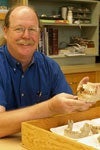
Mark Hubbe is a Professor at The Ohio State University, specializing in skeletal biology and human evolution. His primary research focuses on morphological adaptation and modern human dispersion, particularly in South America during the Holocene. A secondary focus examines skeletal measures of health and lifestyle in prehistoric Andean societies. He leads the Human Evolution, Adaptation, and Dispersion Studies (HEADS) initiative, fostering interdisciplinary collaboration across institutions globally.
His current graduate students include Megan Duncanson, Alexis Dzubak, and others, co-advised with experts in related fields. Hubbe collaborates with researchers in Brazil, Germany, and the U.S. to study topics such as dental metrics, climate adaptation, and social stratification in ancient populations. His work integrates morphometrics, isotopic analysis, and archaeological evidence to explore human biological diversity and historical lifeways.
Key projects include analyzing Tiwanaku-period social structures in northern Chile and investigating the biological impacts of industrialization in historical populations. His research emphasizes quantitative methods, including 3D craniometric analysis and morphological clustering algorithms, to address questions about human migration and adaptation.
Hubbe’s contributions span over 150 articles, with recent work focusing on topics like craniofacial climate adaptation, dental stress indicators, and the application of bioarchaeological theory. His studies frequently highlight the interplay between biological and cultural factors in shaping human populations.