معرفی
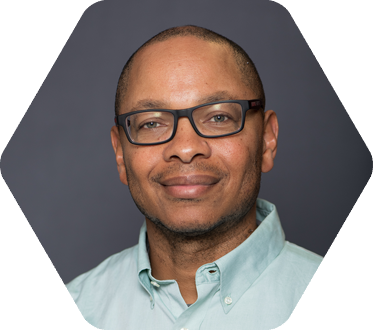
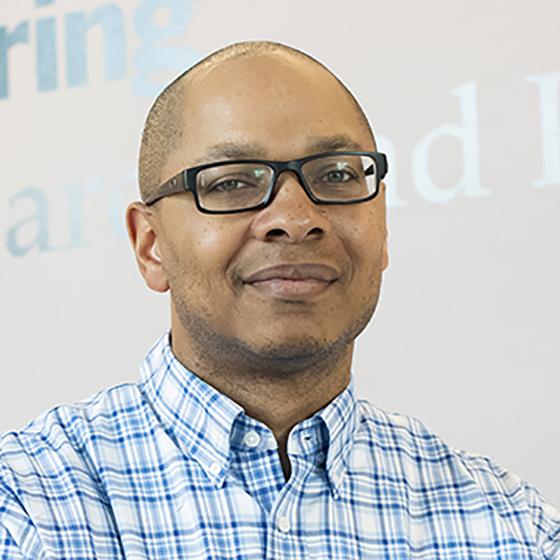
Mark E. Lewis is the Maxwell M. Upson Professor of Engineering at Cornell University, affiliated with the School of Operations Research and Information Engineering within the College of Engineering. He previously served as an Associate Dean and Senior Associate Dean for diversity and faculty development in Cornell Engineering, and co-founded the INFORMS Minority Issues Forum to support underrepresented minorities in academia. His leadership roles include chairing the INFORMS Applied Probability Society and serving on the Provost’s Task Force to Enhance Faculty Diversity.
Education: Ph.D. in Industrial & Management Engineering (Georgia Tech, 1998), Master’s in Theoretical Statistics (Florida State, 1995), and undergraduate degrees in Mathematics and Political Science (Eckerd College, 1992). Postdoctoral work at the University of British Columbia’s Center for Operations Excellence. Prior faculty positions at University of Michigan and University of Michigan.
Research focuses on dynamic control of service systems using stochastic dynamic programming and Markov decision processes. Key areas include resource allocation in queueing networks, inventory systems, transportation, and healthcare. Sub-areas involve bias optimality, non-stationary systems, and MDP convergence. Applications span telemedicine, emergency medical services, and large-scale computing networks.
Recent publications emphasize telemedicine physician staffing, constrained queueing optimization, and flexible server scheduling in dynamic systems. Articles reflect a strong focus on healthcare systems, network science, and stochastic control.
- Recipient of Faculty Award for Excellence in Research, Teaching & Service through Diversity (2021)
- PECASE Award (2002)
- Frontiers on Engineering Participant (2007)
- Named INFORMS president-elect for 2025-2026
Advising contributions include mentoring doctoral students in diversity-focused programs and co-creating the Ephraim Garcia Engineering Society. Grants secured include funding for Cornell Sloan and Colman fellowships for underrepresented students, and postdoctoral fellowships. He also oversees Diversity Programs in Engineering to provide academic support for first-generation and minority students.
Labs/Teams: Active in Cornell’s Office of Faculty Development and Diversity, co-chair of the 2009 INFORMS Applied Probability Conference, and collaborates with the Cornell Center for Health Equity (through service roles).