معرفی
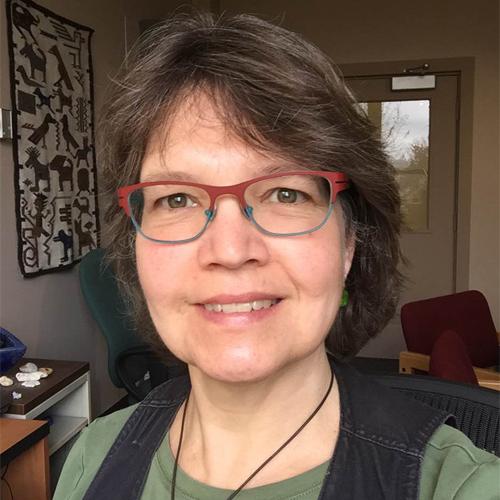
Marja Haagsma is a Postdoctoral Scholar at Oregon State University's Department of Biological and Ecological Engineering. She holds a PhD in Water Resources Engineering from Oregon State University and specializes in ecohydrology, remote sensing, and plant pathology. Her work integrates hydrological modeling with stable water isotopes and hyperspectral imaging to address environmental challenges like disease detection in agriculture and forestry. She contributes to the National Ecological Observation Network (NEON) dataset and collaborates on interdisciplinary projects. Marja teaches BEE 313: Ecohydrology and advises graduate committees but does not serve as a sole advisor. Her research emphasizes machine learning applications, environmental data analysis, and land surface modeling improvements. She has developed innovative tools like the HyperRail system for imaging and sensor control.
Education:
- PhD in Water Resources Engineering, Oregon State University
Research interests span hydrology, remote sensing applications in disease detection, and ecohydrology. She explores how atmospheric feedbacks and CO2 levels influence plant physiology, and employs isotopic data to refine environmental models. Her fieldwork includes monitoring soil-borne pathogens and invasive fungal infections using hyperspectral techniques, with a focus on plant genotype susceptibility.
Publications highlight advancements in ecohydrology, isotopic analysis, and machine learning-driven disease monitoring. She has contributed to datasets like NEON's isotopic composition records and pioneered methods for mapping acid-generating mine lands via UAVs. Her work bridges ecological engineering with climate change adaptation strategies.
Grants & Collaborations: Engages in multi-institutional projects combining phenomics, common gardens, and landscape genomics to address disease resistance and climate resilience in tree species. Collaborates on American chestnut blight resistance studies using small stem assays and remote sensing.
Labs/Teams: Affiliated with OSU's Biological & Ecological Engineering department and contributes to NEON projects, emphasizing field-based and lab-driven ecological research.