معرفی
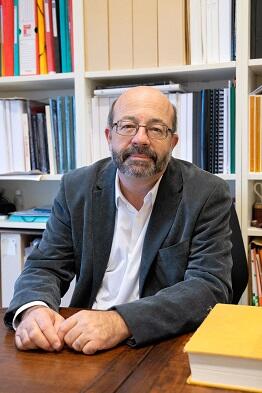
Maria Nilsson is a Senior Lecturer in the Department of Archaeology and Ancient History at Lund University's Faculty of Humanities and Theology. She serves as mission director of the groundbreaking Gebel el Silsila Project in Egypt, which she has led since 2012, focusing on the world's largest ancient quarry 'Kheny' located in Upper Egypt.
Her research centers on 'pseudo-script' systems, particularly Greco-Roman quarry marks at Gebel el Silsila, examining 10,000 petroglyphs spanning from c. 2700 BCE to 200 CE. She applies social semiotics theory to decode visual communication of non-elite ancient Egyptian communities, challenging traditional Egyptology's elite-focused narratives through post-colonial and gender studies perspectives.
Her recent publications reveal trends in rock art documentation, quarry mark analysis, and interdisciplinary approaches combining zooarchaeology with habitat modeling. Notable works include studies of rock inscriptions, animal depictions, and game boards discovered at the site, demonstrating the breadth of human activity at this ancient quarry.
- Tracing identities in Ancient Egyptian Quarry Art through social semiotics (2024)
- Rausingpriset (2020)
- Millenia of artistic expressions: digital documentation of Prehistoric Rock Art at Gebel el Silsila (2016)
As principal investigator, Nilsson manages multiple research projects including 'QuarryArt: Beyond the urban elite' (2024-2027), previously securing funding from the Swedish Research Council and a prestigious Marie Curie Fellowship. Her work bridges academic research with public engagement through numerous media appearances in National Geographic, Travel Channel, and Swedish television documentaries.
She leads an international team conducting fieldwork at Gebel el Silsila, implementing digital documentation techniques to preserve threatened rock art panels while investigating the socio-cultural contexts of ancient quarry workers' visual expressions across millennia.