معرفی
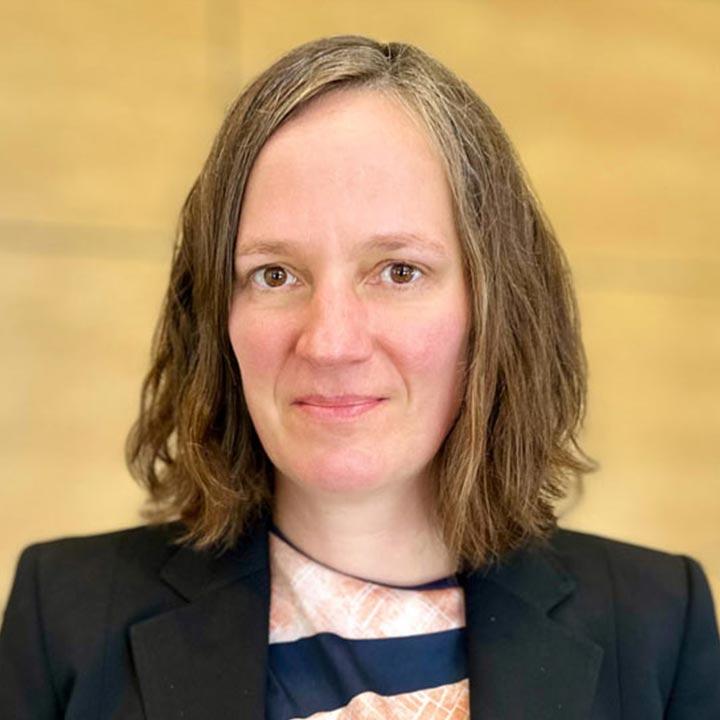
Margot J. Pollans is a Professor of Law and Faculty Director of the Pace Food Law Center at the Elisabeth Haub School of Law, Pace University. She holds the distinguished James D. Hopkins Professor of Law title for 2023–2025 and is recognized for her leadership in food law and environmental justice. Her scholarly work bridges administrative law, food systems, and social equity, with publications in top journals such as Michigan Law Review and Harvard Environmental Law Review.
Education:
- BA, Columbia University
- JD, New York University School of Law
- LLM, Georgetown University Law Center
Her research focuses on food and agriculture law, environmental regulation, administrative law, and social justice. She explores how legal frameworks shape food systems, consumer rights, and environmental protection, particularly in marginalized communities. Her recent work critiques regulatory failures and advocates for more democratic and equitable food governance. She is also deeply involved in national food policy reform through the Farm Bill Law Enterprise.
Professor Pollans’s recent publications reflect a strong trend toward interdisciplinary scholarship, combining legal analysis with public health, environmental science, and gender studies. Her work spans topics from eco-labeling and food safety to reproductive rights and climate resilience, demonstrating a commitment to systemic justice and regulatory reform.
Scientific Awards:
- Goettel Prize for Faculty Scholarship (2022)
- 40 Under 40 Rising Stars in Food Policy (2017)
She has received fellowships and grants including the UCLA Resnick Program for Food Law & Policy Teaching Fellowship and the Georgetown Institute for Public Representation Fellowship. She has supervised student clinicians and clerked for Judge David S. Tatel of the D.C. Circuit. She teaches courses such as Administrative Law, Environmental Law Survey, Agriculture Law, and Food Systems & the Environment Law.
Professor Pollans leads the Pace Food Law Center, a national hub for food law scholarship and policy innovation. She is part of a collaborative network of law schools working on equitable farm bill reform, emphasizing climate resilience, racial justice, and public health. Her work continues to influence both academic discourse and real-world food policy.