معرفی
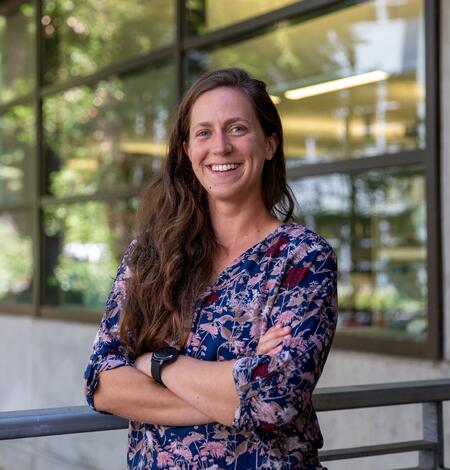
Margaret Zimmer is a Professor in the Department of Soil & Environmental Sciences within the College of Agricultural and Life Sciences at the University of Wisconsin-Madison. Her research focuses on watershed hydrology, soil physics, and biogeochemistry, with particular expertise in wildfire-impacted systems, non-perennial streams, and coastal wetlands. She leads the Watershed Hydrology Lab and actively recruits graduate students.
Her research interests center on physical and chemical hydrology, including watershed hydrology, hillslope processes, runoff generation, critical zone science, water quality, surface water-groundwater interactions, wetlands, and nutrient cycling. She investigates how disturbances like wildfires and climate change alter hydrological and biogeochemical processes, with field sites spanning California's coastal ranges to Midwest agricultural landscapes. Her work integrates field measurements, stable isotope tracing, and modeling to understand complex system dynamics.
Analysis of her recent publications reveals dominant themes in wildfire-hydrology interactions (28% of articles), non-perennial stream dynamics (22%), and coastal wetland biogeochemistry (19%). Her 2021 NSF CAREER Award project on critical zone architecture demonstrates her leadership in advancing fundamental hydrological understanding. Methodologically, she frequently employs stable water isotopes, radionuclide tracing, and high-frequency sensor networks.
- NSF CAREER Award: Subsurface critical zone architecture controls on hydrologic partitioning across spatial scales (2021)
- Collaborative Research: Characterizing controls on postfire steepland ravel (2021)
Dr. Zimmer emphasizes collaborative research networks and has contributed to community discussions on open data sharing and addressing unwritten academic rules. Her lab maintains active field sites in California's Elkhorn Slough and Midwest watersheds, with recent work focusing on post-wildfire sediment transport, tidal marsh restoration, and streamflow flashiness controls across the United States.